
5 Style Resolutions for Men to Keep in 2026 (And How to Achieve Them)
Published on · Updated on | 28 minutes of reading
As 2026 is already well underway, it’s customary to make resolutions—but keeping them is another story entirely. That’s why we at Gentologie have put together 5 style resolutions for men to keep in 2026.
1. Invest in Quality Over Quantity

Photo: © 2021 DANJAQ, LLC et MGM. All right reserved.
As I mentioned in the Complete Guide to the Modern Gentleman in 2026, it’s essential to build a thoughtful wardrobe with durable pieces rather than multiply impulse purchases.
The first step? Set yourself a realistic annual budget. Write this amount into your finances and prioritize 2–3 exceptional pieces per season rather than a dozen mediocre ones. Invest according to your means, without breaking the bank. If you can only afford a single piece at the beginning of the year, that’s perfectly fine—it’s an investment that will stand the test of time.
To evaluate the relevance of a purchase, apply the “cost per wear” rule: divide the price by the estimated number of uses. A $1,200 coat worn 100 times over 10 years actually costs you $12 per wear, while a cheap $150 jacket worn 5 times before falling apart costs you $30 per wear. Prioritize essential pieces you don’t own or that will replace ones you frequently use.
Before any purchase, take inventory of your current wardrobe. Don’t hesitate to create an Excel spreadsheet with photos and the condition of each piece. This simple tool will help you avoid duplicate purchases and identify the complementary pieces you truly need. If you’re not into digital, a traditional notebook with glued-in pictures will do the trick. Note that certain stores, like our friends at Clusier and Harry Rosen, keep your purchase history on your profile and can advise you on what’s missing to complete your wardrobe.
Quality begins with materials. Prioritize noble materials like virgin wool, Egyptian cotton, authentic cashmere, and full-grain leather. Beware of marketing alternatives: that much-touted “vegan leather” is actually PVC—a plastic that will crack over time and can never be repaired or re-dyed like genuine leather.
Even among noble materials, not all cashmere is created equal. Educate yourself on the origin and true quality of fabrics. Clothing from Asia often displays (too) appealing prices, but the quality invariably suffers. Prioritize countries known for their textile craftsmanship: England, Italy, Spain, and France remain safe bets. Some pieces made in Canada and the United States can be of excellent quality, but it all depends on material sourcing.
One final word of advice: don’t be dazzled by certain prestigious mentions. Many tailors showcase “Loro Piana” pieces, but this often refers only to the fabric, not the construction that actually makes the reputation of this quiet luxury italian brand.
Check out our guide to learn more.
2. Develop Your Personal Style
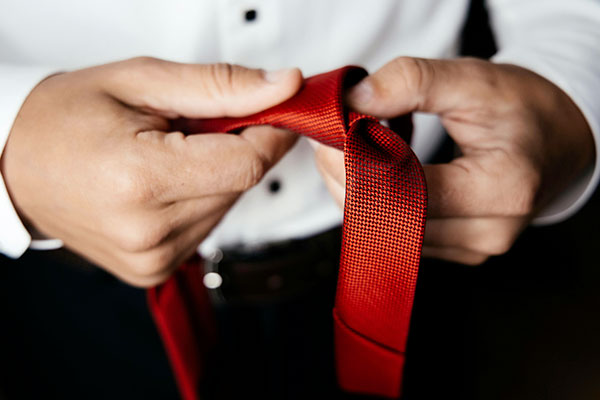
In a world saturated with marketing initiatives that encourage us to blindly follow trends, asserting your sartorial identity becomes an act of resistance. But above all, you must think long-term: not what you want to be in 6 months, but in 10 years.
Start by creating your visual library. Pinterest remains a remarkable tool for inspiration. More and more men’s brands and fashion content creators are investing in the platform, offering a nearly infinite source of inspiration. Create thematic boards: one for formal looks, one for smart casual, another for accessories. Over time, recurring patterns will emerge naturally.
Do you admire the style of certain public figures? Analyze their sartorial choices and draw inspiration from what resonates with your own vision. However, be careful: don’t copy blindly. Make sure these are pieces you’ll actually want to wear daily. Take the best from these styles—what corresponds to your personality and lifestyle.
Experimentation must be gradual. Start by introducing a single distinctive element: a signature accessory (vintage watch, silk pocket square, distinctive eyewear), a specific cut, or a cohesive colour palette. If you still like this element after a few weeks, continue with pieces that naturally harmonize. Remember that you’re striving to become a gentleman: restraint remains the golden rule. Too much is as bad as too little.
Document your evolution. Find a neutral spot in your home with a full-length mirror and photograph yourself regularly in your outfits. The camera lens often reveals what the mirror hides: proportions, colour harmony, necessary adjustments. This archive will help you identify what truly works. And never hesitate to return pieces that don’t suit you—but do so before any alterations.
To go further, consider a personal stylist. Admittedly, their services represent an investment, but the return can be significant if you approach the experience with honesty. Say what you really think about each suggestion. Be frank with the stylist, but even more so with yourself. This authenticity is, in fact, the key to these 5 style resolutions for men to keep in 2026.
3. Master the Timeless Basics
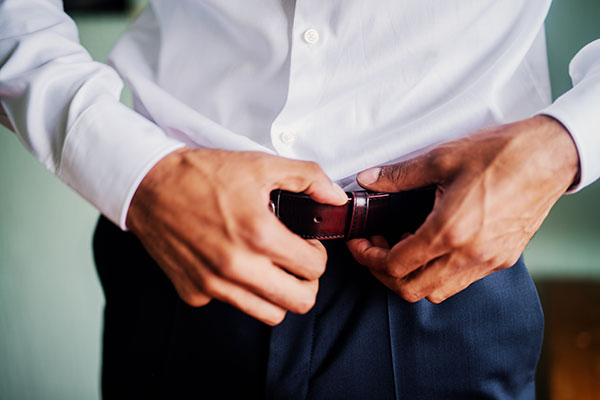
Photo: Adobe Stock
A well-planned wardrobe rests on a simple principle: 80% of what you wear comes from 20% of your collection. These essential pieces form the foundation upon which everything else is built. Rather than collecting dozens of garments worn once a year, perfect the must-haves that will serve you daily.
The 10 Foundational Pieces
Here are the priority investments that will form the backbone of your wardrobe:
The white Oxford shirt – This slightly textured weave offers impeccable structure while remaining less formal than poplin. Opt for a button-down collar that works equally well with a blazer or in casual attire. Ensure the shoulder seams fall precisely on your shoulder line. The ETON brand makes excellent ones, with numerous adjustment options according to your preferences (cuffs, sleeve length, collar style, etc.).
The navy blazer – The most versatile investment in your wardrobe. Wear it with grey trousers for a professional look, with jeans for a casual outing, or as a suit with matching trousers. Important note: this rule doesn’t apply to tuxedos, which remain an inseparable ensemble. Choose a semi-fitted cut that transcends trends.
The beige chino – Neutral, elegant, and versatile. It pairs with practically everything: sweaters, shirts, blazers. Opt for a straight or slightly tapered cut depending on your build. In our winter climate, however, it becomes less practical: slush splashes and de-icing salt won’t do it any favours.
Raw indigo jeans – A non-faded denim that will naturally patina with your wear patterns. Avoid pre-fading and rips: you’re not 16 anymore. A classic straight cut remains consistently elegant and spans decades.
The quality polo – Prioritize piqué cotton. The Sunspel brand offers quality that justifies the investment, with the added bonus of no flashy logo. A well-cut polo advantageously replaces a shirt on hot days while maintaining a certain elegance.
The navy crewneck sweater – In merino wool or cashmere if your budget allows. This piece can be worn alone or over a shirt. Navy pairs with everything and conceals stains better than pale shades—a significant advantage in daily wear.
The raincoat – The classic beige Burberry trench coat spans decades without aging. Opt for a mid-thigh length (like the British brand’s Kensington model) and a cut that allows you to wear a blazer underneath without constraint.
Derby shoes – More versatile than oxfords, derbies work equally well with a suit or jeans. Invest in a pair made of full-grain leather, preferably with a Goodyear welted sole that can be resoled. A skilled cobbler will make them last 20 years.
The leather belt – One in dark brown, one in black. Period. Ensure the buckle remains understated and the leather is full grain. Avoid belts with interchangeable buckles: they invariably lack refinement. Important note: if you wear suspenders (essential with a tuxedo or three-piece suit), never add a belt. Both serve the same function, and wearing them together constitutes a major fashion faux pas.
The classic watch – A sober dial (white, navy blue, or black), a leather or steel bracelet, a case between 38 and 42mm. This watch must be wearable from Monday to Sunday, from the office to a restaurant, without ever clashing.
Winter Bonus: 3 Essential Pieces for Our Climate
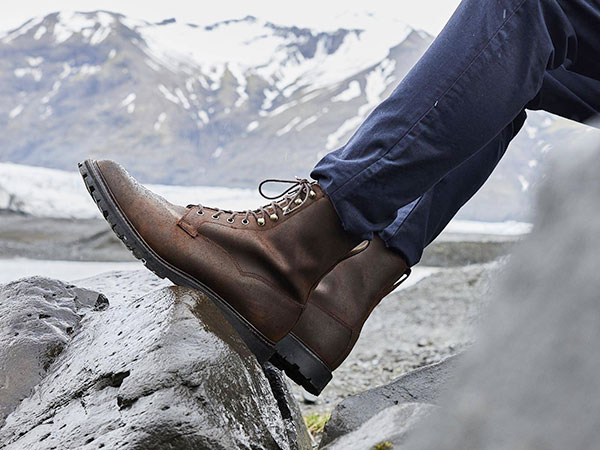
Photo: Crockett & Jones
The wool winter coat (peacoat or overcoat) – A raincoat isn’t sufficient for Canadian winters unless you layer extensively. Invest in a quality wool coat (80% minimum) with a quilted lining. The navy peacoat remains a timeless classic, while the charcoal or anthracite wool overcoat offers more formality. Opt for a minimum mid-thigh length for true protection. Plan for a budget approaching $800 for quality that will last 10-15 years.
Elegant winter boots – Forget your derbies from October to April, or bring them in a nice leather shoe bag for indoor events. The salt, the slush and the cold require robust boots that remain elegant. Look for models in thick leather (a single type of material—avoid multiple leather types), waterproofed, with a Vibram lug sole and insulated lining. Prioritize lace-up boots over Chelsea boots: laces offer better adjustment and, most importantly, prevent you from getting stuck in the snow trying to remove them. Heritage-style boots, like those from the American brand Danner, worn by James Bond in Spectre, offer an excellent balance between ruggedness and refinement. Other boot options include Paraboot and Berluti, French-made and extremely durable; Crockett & Jones or Grenson, British-made and highly refined. A few Quebec brands like Saute-Mouton and Anfibio produce quality boots with the advantage of after-sales service in Quebec. As for Dayton’s in British Columbia, selection is limited due to a recent fire, but you can support them so they regain their place on the men’s boot landscape. Personal tip: don’t invest in boots with retractable crampons—they’re not at all practical. Get separate crampons instead. These boots represent a substantial investment, but carefully examine the materials and, above all, be patient: European boots are often made to order.
The merino wool turtleneck – This timeless piece advantageously replaces a shirt during extreme cold. Worn alone or under a blazer, the turtleneck offers warmth and elegance. Steve McQueen and James Bond wore it with class—you can do the same. Opt for merino wool (breathable and itch-free) in black, navy, grey, or beige. Avoid overly high and bulky collars. Feel the fabric and check the origin.
Honourable mentions: A cashmere or wool scarf and leather gloves lined with cashmere complete the gentleman’s winter arsenal. Once again, prioritize quality.
Master the Perfect Fit
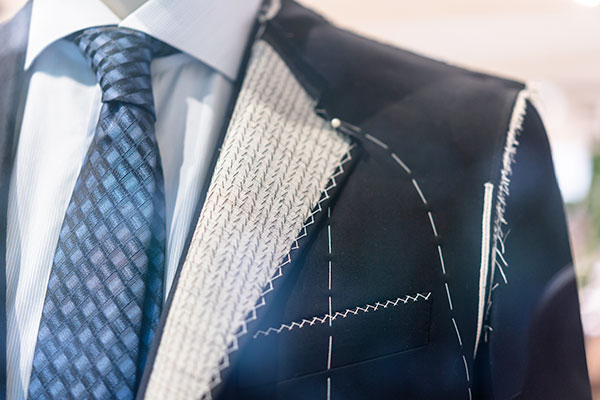
Photo: Adobe Stock
The world’s most expensive clothing won’t flatter you if it’s poorly fitted. Here are some fundamental rules to follow:
Shoulders – The seam must fall exactly where your shoulder ends and your arm begins. Too wide, you’ll look like you’re borrowing your father’s clothes. Too tight, you’ll be uncomfortable and the fabric will wrinkle unattractively. This is the most difficult measurement to alter with a tailor: better to get it right from purchase.
Shirt sleeves – They should reach the wrist bone when your arms are relaxed at your sides. Under a blazer, about 1 to 1.5 cm of cuff should show. If you wear a larger watch than usual, have your cuffs adjusted accordingly to prevent the fabric from wrinkling around the case.
Blazer sleeves – They end just above the base of the thumb, allowing the shirt to peek out slightly. This small touch makes all the difference between a well-fitted blazer and an ordinary garment.
Trouser break – Trousers should graze the top of your shoes with a slight break at the front. Too long, they wrinkle unattractively. Too short, you look like you’re waiting for a flood—or as we say in Quebec, you’re at high tide.
Shirt collar – You should be able to fit two fingers comfortably between your neck and the buttoned collar. Comfort trumps appearance: a collar that’s too tight will make you look strangled all day.
Six Versatile Combinations to Master

Once you’ve acquired your essentials, here are six foolproof combinations that cover most situations you’ll encounter:
1. Professional look – Navy suit + tie + white shirt + brown derbies + brown belt. This outfit will take you from client meetings to business dinners without a false note. Navy is consistently timeless and works every time.
2. Smart casual – Raw jeans + navy crewneck sweater + white shirt (open collar) + derbies. Perfect for a Friday at the office or a weekend brunch. The sweater over the shirt adds depth without going overboard.
3. Elegant weekend – Beige chinos + navy polo + navy blazer (unbuttoned) + white leather sneakers. This outfit skillfully navigates between relaxation and sophistication. Leather sneakers (think Common Projects, Crown Northampton, or Koio) advantageously replace formal shoes for summer outings.
4. Transitional season – Raw jeans + Oxford shirt + crewneck sweater + raincoat. Ideal for cool autumn mornings or spring evenings. Layering allows you to adapt to temperature variations by simply removing the raincoat or sweater.
5. Casual evening – Navy chinos + white shirt + brown belt + brown derbies. A classic that works for dinners with friends, gallery openings, or first dates. The white shirt elevates the ensemble without becoming formal.
6. Winter chic – Dark grey wool trousers + navy merino turtleneck + navy peacoat + light grey cashmere scarf + brown leather winter boots + brown leather gloves. This outfit faces freezing temperatures without sacrificing elegance. The turtleneck replaces the shirt for added warmth, while wool trousers offer much more insulation than chinos. The peacoat structures the ensemble and protects from wind. Perfect for winter outings, outdoor events, or simply navigating the city with style despite plummeting temperatures. The navy-grey-brown palette remains timeless and harmonious.
The Tailor Appointment: Essential
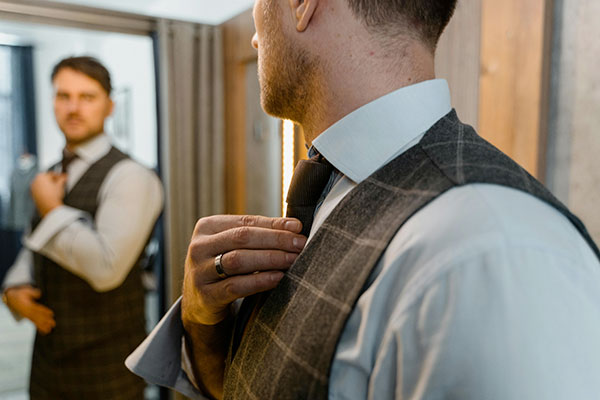
Photo: Tima Miroshnichenko | Pexels
Even high-end garments generally require adjustments. Find a good tailor you trust and make an appointment for:
- Shortening blazer sleeves ($15-25)
- Adjusting trouser waist ($20-30)
- Hemming trousers to perfect length ($15-20)
- Taking in a shirt that’s too loose ($25-35)
These prices are provided for reference and may vary depending on your region and chosen tailor. Often these adjustments are included with the purchase of a garment.
These small alterations will radically transform how a garment looks when worn. An $800+ suit, poorly fitted, will always look worse than a $400 suit tailored by a skilled tailor. Even James Bond’s impeccable style, which we adore at Gentologie, has its missteps: certain suits in Spectre were far too tight and wouldn’t last long in real life, dangerously limiting the actor’s movements.
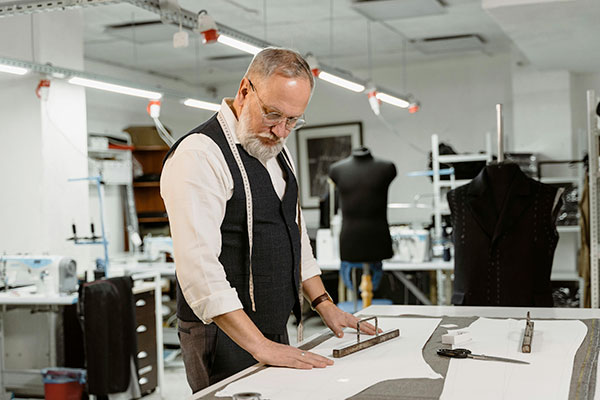
Photo: Tima Miroshnichenko | Pexels
Keep in mind, however, that there’s a limit to what a tailor can accomplish. Never buy a piece that’s far too large, thinking that “the tailor will fix it.” If you can’t find anything suitable in ready-to-wear collections, opt for made-to-measure clothing—many tailors and boutiques offer this service at surprisingly affordable prices.
4. Educate Yourself About Fabrics and Construction

Photo: Rimiscky Tayuna | Pexels
In a world where marketing often trumps substance, becoming an informed buyer is your best protection against unnecessary expenses. Understanding what distinguishes quality clothing from mediocre pieces radically transforms how you approach shopping. This knowledge will allow you to invest intelligently and avoid marketing traps.
Decoding Composition Labels
Labels hide technical language that few people master—I learned a great deal myself while writing this article. Here’s how to decipher them:
Super numbers (Super 100s, 120s, 150s, etc.)—These numbers designate the fineness of wool fibres. The higher the number, the finer and softer the yarn. A Super 100s represents an excellent balance between quality and durability for everyday use. Super 150s and higher offer a sumptuous hand feel but prove more fragile. Avoid falling into the “higher is better” trap. A Super 180s will be amazing, but it will not last as long as a well-constructed Super 110s.
Combed vs. carded yarns—Combing eliminates short fibres and aligns long fibres in the same direction, creating smoother, more resistant fabric less prone to pilling. Carded yarns, less expensive, produce more textured but less durable fabric. Look for the mention “combed” on labels for shirts and knitted garments.
Weaves to know:
- Oxford: textured weave, ideal for casual shirts
- Poplin: tight and smooth weave, perfect for formal shirts
- Twill: robust diagonal weave, used for chinos and certain suits
- Flannel: brushed and soft wool, ideal for winter
- Gabardine: tight and resistant twill, excellent for raincoats, like the Burberry trench
Percentage matters — A “100% cotton” shirt isn’t necessarily better than a 97% cotton/3% elastane blend that will offer more comfort and freedom of movement. However, beware of blends containing more than 40% polyester: the fabric will breathe less well and age less gracefully.
Understanding Garment Construction
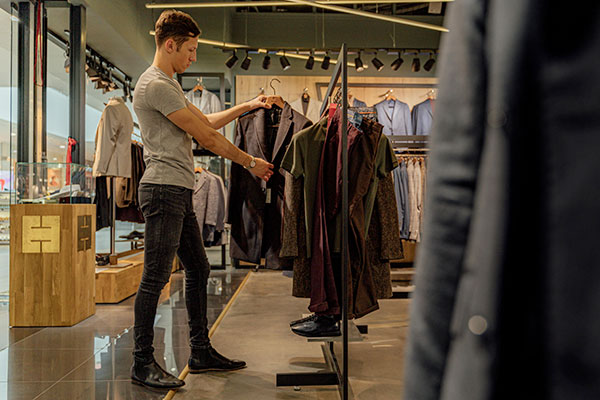
Photo: Anthony Shkraba | Pexels
Suit jackets and blazers: full canvas vs. half canvas vs. fused
This is where quality truly reveals itself. The difference lies in the middle layer between the outer fabric and the lining:
Full canvas: A canvas made of horsehair or linen is hand-sewn over the entire surface of the jacket. This construction moulds to your body over time, creating a natural silhouette that improves with each wear. It’s the pinnacle of quality, generally reserved for blazers starting at $1,500 and up. The jacket “breathes” better and maintains its shape for decades.
Half canvas: The canvas covers only the upper part of the jacket (chest and shoulders), while the bottom is fused. An excellent quality-price compromise, found in blazers from $600 to $1,500. Offers 80% of full canvas advantages for a fraction of the price.
Fused: The interlining is glued to the fabric with heat and adhesive. Less expensive, but the jacket can develop bubbles over time and with humidity. The silhouette remains more rigid. Found under $500.
Simple test: Pinch the fabric at chest level. If you feel three distinct layers (outer fabric, canvas, lining), it’s a canvassed jacket. If you only feel two layers glued together, it’s fused.
Shoes: Goodyear vs. Blake vs. Cemented Construction
Goodyear welted: We’re not talking about the tire brand here, but about the method of stitching a sole. The sole is stitched to a leather strip (the welt), which is itself stitched to the upper. The double-stitched sole ensures that the shoe’s sole can be replaced endlessly without causing any harm to the footwear. It’s the most durable construction, recognizable by visible stitching around the sole’s perimeter. Brands to favour: Alden, Crockett & Jones, Church’s.
Blake: The sole is stitched directly to the upper by a single interior stitch. They are lighter and more flexible than Goodyear, but less waterproof and slightly less durable. Popular in elegant Italian shoes.
Cemented: The sole is glued. Period. Found on cheap shoes that cannot be resoled. Avoid any purchase beyond $150.
Seams and finishes
Examine carefully:
- Stitches per inch: The more there are (12–16), the stronger the seam
- Buttonholes: Hand-sewn buttonholes (with small irregularities) indicate a high-end garment
- Buttons: True buttons made of horn, mother-of-pearl, or corozo are more beautiful and durable than plastic
- Interior seams: Should be clean, with no loose threads
Visiting Workshops and Manufacturers
Nothing replaces the experience of seeing artisans at work. Here are some suggestions:
In Québec province:
- Certain tailors in Montréal and Québec City accept workshop visits by appointment—don’t hesitate to ask them
- Fashion schools like LaSalle College occasionally organize open houses where you can see students at work
- Certain high-end boutiques, like Harry Rosen, Holt Renfrew, and Clusier, sometimes offer fitting demonstrations
Internationally:
- Certain Italian manufacturers in the Biella and Naples regions occasionally offer visits—inquire with local tourist offices
- In England, Savile Row and the Northampton region (shoes) sometimes organize open-door events whose dates should be confirmed
- Several major luxury brands offer factory tours by reservation
Accessible alternative: Watch documentaries like “Savile Row” or YouTube channels like Kirby Allison’s Hanger Project that document artisanal manufacturing processes.
Essential Reading for Deeper Knowledge
Photo: Jonathan Borba | Pexels
These works will transform your understanding of men’s clothing:
Must-haves:
- Dressing the Man by Alan Flusser — The bible of men’s style, covering proportions, fabrics, and history
- The Suit by Nicholas Antongiavanni—In-depth analysis of suit construction
Pour aller plus loin :
- Gentleman: A Timeless Guide to Fashion by Bernhard Roetzel—Magnificent visual guide
- The Savile Row Story by Richard Anderson — The history of the world’s most elegant street
- Style and the Man by Alan Flusser—Practical advice and addresses
- The Sartorialist: MAN: Inspiration Every Man Wants, Education Every Man Needs by Scott Schuman—Visual inspiration of real men’s style around the world
Follow the Right Educational Accounts
Instagram abounds with educational content on men’s clothing. Here are accounts that truly teach:
For technique and construction:
- Permanent Style London (Simon Crompton) In-depth analyses of brands and construction
- Style forum — Community of enthusiasts sharing their knowledges
- Vadrouille (In french) — An account of a French company that restores quality shoes
Artisans à suivre :
- Cifonelli — Parisian tailor showing hand-canvassing
- Ambrosi —Traditional Neapolitan trousers
- Budd Shirtmakers —Historic London shirtmaker
Develop Your Eye: The Tactile Method
Theory never replaces practice. Here’s how to train your sense of touch and observation:
In store:
Compare systematically—Touch a $400 suit, then a $1,500 one, then a $3,000 one. Feel the difference in weight, suppleness, and texture. Identify what justifies the price gap. Look at the country of manufacture.
Ask questions—Good salespeople love sharing their knowledge. Ask: “What’s the construction of this blazer?”, “Where does this fabric come from?”, “What’s the difference between these two shirts at the same price?”
Inspect details—Turn blazers inside out to see interior seams. Examine buttonholes. Lift shoes to see soles. Details reveal quality.
Create a mental repertoire—Take notes on your phone after each visit. “2-ply Loro Piana cashmere: incredibly soft but $800.” These observations will form your reference base.
Practical exercise: Visit three stores of different ranges (H&M, Club Monaco, Harry Rosen/Clusier) and compare three white Oxford shirts. Touch them, examine seams, read labels, try them on. You’ll immediately understand what separates a $40 shirt from a $200 one.
Patience is essential—This education takes months, even years. Don’t get discouraged if you don’t immediately see all the differences. Each time you step into a store, crack open a book, or examine an article of clothing, your discernment sharpens. Over time, you’ll develop what’s called “the eye”: this ability to instantly evaluate a piece’s quality.
5. Maintain Your Wardrobe as an Investment
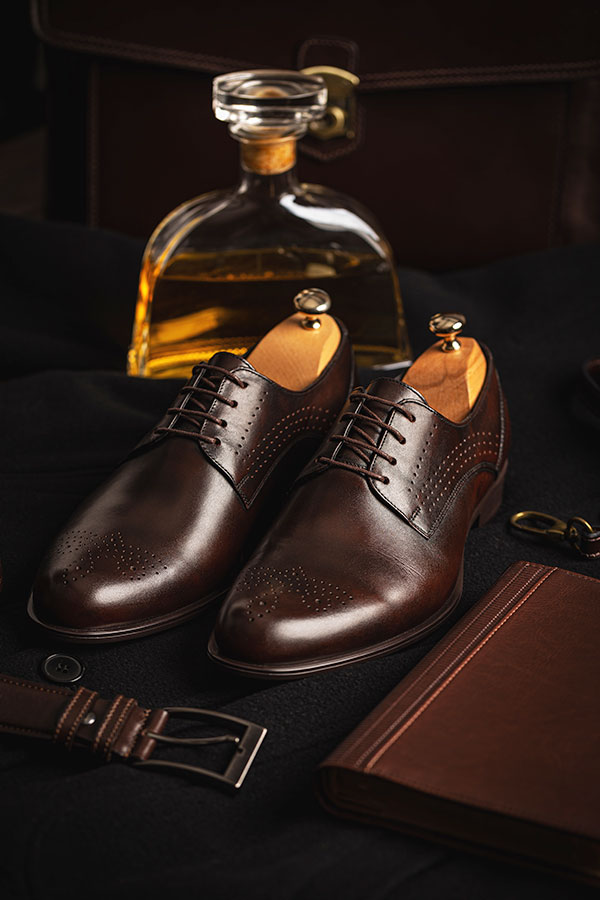
Photo: Adobe Stock
You’ve just invested hundreds, even thousands of dollars in quality pieces. Proper maintenance will determine whether they last 2 years or 20 years. A well-maintained jacket spans decades; a neglected jacket looks worn after just a few seasons. The difference? A simple but rigorous routine that preserves your investments.
The Daily Routine: 5 Minutes That Change Everything
After each wear of a jacket or trousers:
Empty pockets immediately—Objects (wallet, phone, keys) deform fabric and create permanent bulges. When you get home, empty your pockets systematically.
Brush your clothes—Use a horsehair clothes brush ($20–40) with downward strokes to remove dust, lint, and particles. Always brush in the direction of the fabric. Focus on shoulders, lapels, and trouser hems where dirt accumulates. This simple step considerably extends garment life by preventing particles from abrading fibres.
Let breathe for 24 hours—Never put a garment back in the wardrobe immediately. Hang it in a ventilated room (not the humid bathroom) so body moisture can evaporate. Wool absorbs up to 30% of its weight in moisture—it needs time to dry.
Use appropriate hangers—Wooden hangers with wide shoulders (not dry cleaner hangers!) maintain the shoulder shape of your jackets and shirts. Invest $10–15 per quality hanger for your important pieces. Particularly heavy jackets require padded hangers.
Hang correctly—Jackets: button only the middle button. Trousers: use clip hangers that hold by the waist (not by the hems, which damage them). Shirts: button the second or third button.
For shoes:
As soon as you remove them, insert cedar shoe trees ($40–80 per pair). These wooden forms:
- Absorb perspiration moisture
- Preserve the original shape
- Prevent permanent creases
- Release a pleasant fragrance that neutralizes odours
Let your shoes rest at least 24 hours between wears. Rotating between 3 and 4 pairs exponentially extends their lifespan.
Dry Cleaning: Your Enemy in Disguise
Here’s a truth that will surprise many: dry cleaning damages your clothes. Aggressive chemical solvents progressively degrade fibres, discolour fabrics, and dissolve glues used in jacket construction.
Golden rules:
- A quality jacket should go to the dry cleaner only 1–2 times per year maximum
- Clean only in case of visible stains or persistent odour
- In the meantime, airing and brushing amply suffice
Finding a good dry cleaner: Not all dry cleaners are equal. Ask these questions:
- “Do you use traditional dry cleaning or wet methods?” (Wet methods are gentler)
- “How do you treat canvassed jackets?”
- “Do you offer hand pressing or machine pressing?” (Hand is preferable)
Test with a less important piece before entrusting them with your $1,500 jacket. Observe pressing quality, residual odour, and especially whether buttons are well protected.
Average cost in Québec:
- Shirt: $3–5
- Trousers: $8–12
- Jacket: $12–18
- Suit: $20–30
The Cobbler: Your Best Ally
A good cobbler transforms worn shoes into nearly new pieces. Here’s how to work with one:
Essential services:
- Complete resoling ($80–150): Replaces worn sole. Do when you see leather showing through.
- Professional polish ($15–25): A good cobbler applies multiple coats of polish, buffs, and shines. Different from home polishing.
- Heel repair ($30–50): Do as soon as heels show wear to avoid damaging shoe structure.
- Waterproofing ($20–35): Protects leather against water, snow, and salt. Redo each fall.
- Dyeing ($50–100): Restores life to discoloured shoes.
Finding the right one:
- Ask for recommendations at fine shoe stores
- Check online reviews, particularly for resoling
- Visit the workshop: a good cobbler has visible quality tools
- In Montréal: Tony Papas, Le Valet Cireur, Cordonnerie Rockland
- In Québec City: Cordonnerie La Pat Mobile
Preventive maintenance: Never let your soles wear completely. As soon as you see leather showing, consult. A $40 repair today avoids a complete $150 resoling in three months.
Essential Tools to Own
Invest in these tools once—they’ll last decades:
Indispensable (budget: $200–300):
- Horsehair clothes brush ($30–50)—Kent or Redecker make excellent brushes
- Cedar shoe trees ($40–80 per pair)—Buy for your 3–4 main pairs
- Wide-shouldered wooden hangers ($10–15 each)—Invest in 10–15 quality hangers
- Garment steamer ($50–100)—Gentler on fabrics than an iron. Discover our selection in our gift guide for the travelling gentleman.
- Reusable lint roller ($15–25)—Avoid disposable versions
To go further (budget: $150–250):
- Breathable garment bag ($20–40 each)—Cotton, never plastic, which traps humidity
- Complete polish kit ($60–100)—Quality polish (Saphir is the reference), applicator brushes, cloths, buffing brush
- Quality steam iron ($80–150)—For shirts and trousers. Rowenta makes excellent models
- Cashmere stone ($10–15)—Removes pills without damaging fabric
- Waterproofing spray ($15–25)—To treat jackets, coats, and shoes
Where to buy:
- Shoe trees: AAllen Edmonds (on the canadian website and on Amazon) and Woodlore
- Polish products: Saphir at specialized cobblers and on Amazon (Saphir Médaille d’Or)
Basic Repairs: Become Autonomous
Some simple repairs avoid a trip to the tailor. Here’s what you can learn in 30 minutes:
Sewing on a button (difficulty: easy)
Materials: Matching thread, needle, scissors
- Thread the needle, double it, and tie a knot
- Push the needle from the inside to the outside of the fabric.
- Thread the button and push back through another hole
- Repeat 4–5 times crossing thread in an X
- Pass needle between button and fabric, wind thread 3–4 times around existing threads (creates a “shank” giving space to the button)
- Return to the inside, make 3 small knots, cut
Pro tip: Place a matchstick between the button and the fabric while sewing. This automatically creates necessary space.
Repairing a seam that’s coming undone (difficulty: easy-medium)
If trousers or shirt seams come apart:
- Turn garment inside out
- Use thread matching fabric colour
- Sew following exactly the existing seam line
- Make small tight stitches, back-and-forth to reinforce
- Finish with 3 knots inside
What you should NOT attempt:
- Repair visible hole on jacket front (leave to tailor)
- Shorten trousers (unless you have sewing experience)
- Repair broken zipper (too complex)
Resources for learning:
- YouTube: “How to sew a button”
- Ask a tailor or your parents to show you during a visit
- Fabric stores sometimes offer free introductory workshops
Seasonal Organization: Smart Rotation
A well-organized wardrobe preserves your clothes and facilitates morning choices.
End of season (May and October):
Preparing garments for storage:
- Clean each piece (washing or dry cleaning)—NEVER store dirty
- Repair small tears or missing buttons
- Let everything dry completely 24–48 hours
Winter storage (coats, wool, cashmere):
- Use breathable cotton bags (never plastic)
- Add cedar moth balls in bags
- Hang heavy coats and jackets
- Fold sweaters and knits (hanging deforms them)
- Store in a cool, dry, dark place (closet, not humid basement)
Summer storage (linen, light cotton, shorts):
- Fold neatly into cardboard or plastic boxes with lids
- Slip tissue paper between folds to avoid marks
- Label boxes clearly
Spring/fall rotation: Take everything out, air for 24 hours, inspect each piece. Take advantage to eliminate what you haven’t worn in 2 years.
Moth protection: These little creatures love wool, cashmere, and natural fibres. Prevent damage:
- Wash or clean EVERYTHING before storing (moths are attracted to body odours)
- Use cedar balls (sand annually to reactivate)
- Lavender sachets are pretty but ineffective
- Inspect regularly stored clothing
- If you discover moths: immediate dry cleaning of EVERYTHING, complete closet vacuuming
Annual Maintenance Calendar
Create reminders in your phone to not forget anything:
Spring (April-May):
- □ Waterproof shoes and coats before storage
- □ Dry clean winter coats
- □ Store winter clothing with moth protection
- □ Take out and air summer clothing
- □ Have worn winter shoes resoled
Summer (July):
- □ Check the condition of stored clothing (moths?)
- □ Bring jackets for light cleaning if necessary
Fall (September-October):
- □ Waterproof all fall/winter shoes
- □ Have coats checked (buttons, lining) before winter
- □ Store summer clothing
- □ Take out and air winter clothing
- □ Deep polish all leather shoes
Winter (January):
- □ Mid-season: inspect winter clothing for wear
- □ Immediately repair any minor problems
- □ Clean salt off shoes each week
Monthly:
- □ Brush jackets even unworn (avoids dust accumulation)
- □ Polish shoes (rotate 2 pairs per month)
- □ Check closet humidity (dehumidifier if necessary)
Investment vs. Return
To put things in perspective:
Without proper maintenance:
- $1,200 jacket: 3–4 years lifespan (2–3 cleanings per year = damaged fabric)
- $500 shoes: 2–3 years (no shoe trees, worn consecutively)
- Cost over 10 years: ~$4,000 in jackets + ~$2,000 in shoes = $6,000
With proper maintenance:
- $1,200 jacket: 10–15 years lifespan (1 cleaning per year)
- $500 shoes: 10–15 years (with 2 resolings at $120 each)
- Cost over 10 years: $1,200 + $500 + $240 resoling = $1,940
Savings: $4,060 over 10 years, not counting tool investment (~$500).
Maintenance isn’t an additional chore: it’s protecting your money and building a wardrobe that will accompany you for decades. These simple rituals—brushing, airing, and storing correctly—quickly become automatic and take only a few minutes per day.
Conclusion
These five style resolutions for men aren’t insurmountable obligations, but rather a roadmap toward a thoughtful and lasting wardrobe. You don’t need to implement everything overnight. Start with one resolution this week, master it, then move to the next one next month.
Perhaps you’ll buy a single quality piece rather than three mediocre ones. Or maybe you’ll simply create a Pinterest board and add a few inspiring images. Perhaps you’ll make an appointment with a tailor to adjust that jacket sleeping in your wardrobe. Maybe you’ll buy a clothes brush and develop the habit of brushing your jackets after each wear.
Style, like any discipline, builds progressively. What matters isn’t immediate perfection, but the direction you’re taking. Each small gesture—a thoughtful purchase, a well-maintained piece, a tailor adjustment—brings you closer to the man you want to become.
2026 has just begun. This is your year to invest in yourself, to build a wardrobe that reflects you and will serve you for decades. One piece at a time, one resolution at a time.
So, which one will you start with?
Le Club by Gentologie members receive a generous discount at Clusier on their first purchase—a great way to add beautiful pieces to your wardrobe.

Share the post "5 Style Resolutions for Men to Keep in 2026 (And How to Achieve Them)"
Note: When we learn that an error has slipped into our site, we report it by correcting it. If you notice an error, please inform us by contacting us through our Contact us page.