

The Gentleman’s Summer Style
Spend the summer in gentleman’s style. On the menu: Sunspel, Gran Sasso, Eton, Vilebrequin, Orlebar Brown and more…
Published on | 26 minutes of reading
The gentleman’s summer style doesn’t happen by accident — it’s built with intention. Summer is the season that reveals the man who dresses with purpose: fewer layers, less structure, fewer places to hide a poor choice. That’s precisely why a well-considered summer wardrobe demands more thought, not less. This isn’t a list of seasonal trends. It’s a map of the contexts summer multiplies — from the beach to the cockpit of a sailboat, from the terrace to dinner in the city, from a lightweight suit to a formal occasion — and an approach to each one built to last.
On the beach and by the pool
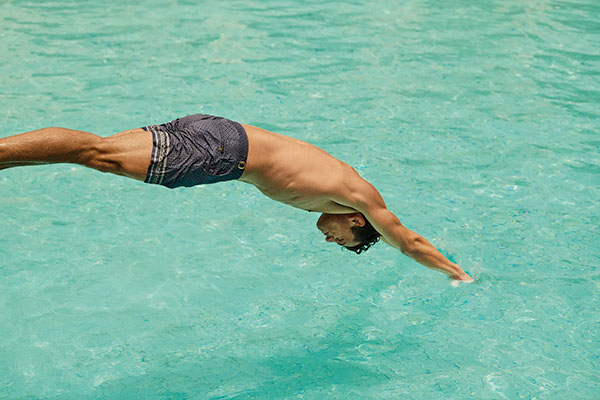
Photo: Orlebar Brown website
The swim short is the most revealing piece in a man’s wardrobe. There’s no jacket to rebalance proportions, no shirt to signal care — only the fabric, the cut, and what they say about the man wearing them. Surf culture has long dominated this category, imposing wide cuts, loud prints, and lengths that fall below the knee. That aesthetic has its place — but it isn’t the gentleman’s.
What we’re looking for: a tailored fit without being tight, a length that stops above the knee, a fabric that dries quickly while holding its shape. Vilebrequin has built its reputation on precisely these criteria since Saint-Tropez — their prints are unmistakable, their finishing impeccable. Orlebar Brown has redefined the men’s swim short by applying the codes of classic tailoring: the Bulldog model, with its side pockets and straight cut, has become an essential reference. Eton, the Swedish house better known for its shirts, also offers swim shorts of excellent quality.
On top, the terry polo has established itself as the quintessential poolside piece — a tradition rooted in the tennis and sailing clubs of the French and Italian Rivieras in the 1950s and 1960s. Its lightly textured surface absorbs moisture without weighing down the silhouette, and its short cut sits naturally over a swimsuit. Sunspel also offers its now-iconic Loopback Cotton Sweatshirt — an exceptionally soft fleece, woven with looped cotton on the inside, worn effortlessly over a swimsuit. It’s the piece you reach for leaving the pool without ever looking like you tried.
Sun protection is non-negotiable. A medium-brim hat — neither too floppy nor too structured — works for most beach settings, though indoors, it comes off. Sunscreen always comes before the outfit. This isn’t a public health footnote — it’s a matter of longevity, for the skin as much as for the style.
Nautical style — on a sailboat, at sea, at the marina
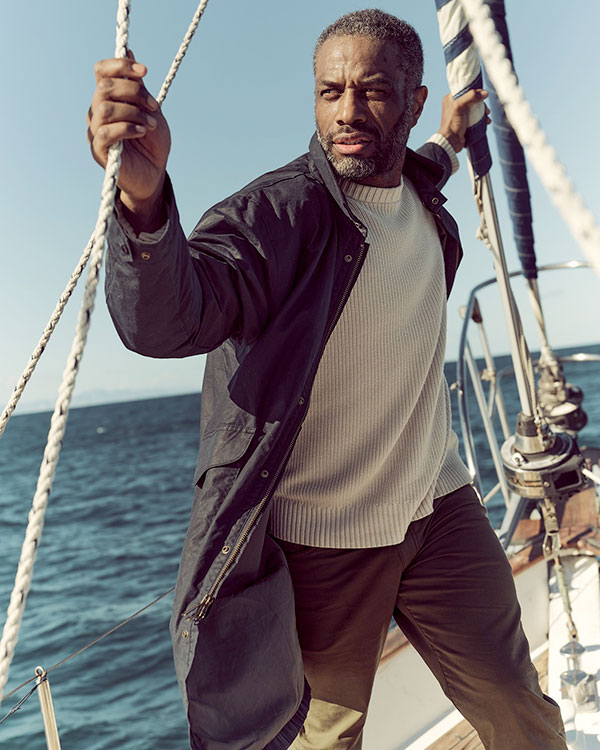
Photo: Filson Facebook page
There’s a distinct sartorial language that belongs to the sea, codified across generations in the yacht clubs of Cowes, Portofino, and Newport. It isn’t a uniform — it’s a set of principles that respond to real demands: resistance to moisture, freedom of movement, and a certain legibility in an environment where wind, sun, and salt impose constraints the city simply doesn’t.
The white or ecru deck trouser remains the centrepiece of this wardrobe. Cut from a treated or slightly technical cotton, it holds up to use without losing its shape. Pair it with a Breton-style cable knit — thick, structured, coastal in spirit — carried on by houses like Bleu de Chauffe or Saint James with remarkable craftsmanship. In milder weather, an Oxford shirt in navy stripes, collar open, sleeves rolled, captures the spirit of the sailing club without overreaching.
The watch coat deserves a mention of its own. A descendant of the oilskin slicker, it has evolved into lightweight versions in technical nylon or waxed cotton that protect against wind and spray without adding bulk. Guy Cotten, the Breton house whose oilskins have equipped professional sailors since 1964, is the definitive reference — a find worth making on a future trip through Brittany or a French harbour town. For those staying on this side of the Atlantic, the criteria remain the same: tailored cut, waxed or DWR-treated fabric, standing collar, subdued colour.
For footwear, the deck shoe with its white non-slip sole began as a functional necessity and became, over the decades, a style classic. Sperry Top-Sider has made it their signature since 1935 (see the footwear section below). Worn without socks — or with invisible socks if the anatomy calls for it — it’s the nautical shoe par excellence, provided you choose quality leather and a restrained colour: honey, navy, or off-white.
The cap, finally, replaces the hat here. Stable in the wind, it offers real protection without making an occasion of itself. Choose a clean model without an oversized logo — a classic six-panel sailing cap in washed cotton, in navy or ivory.
The terrace and the aperitivo — the most delicate transition
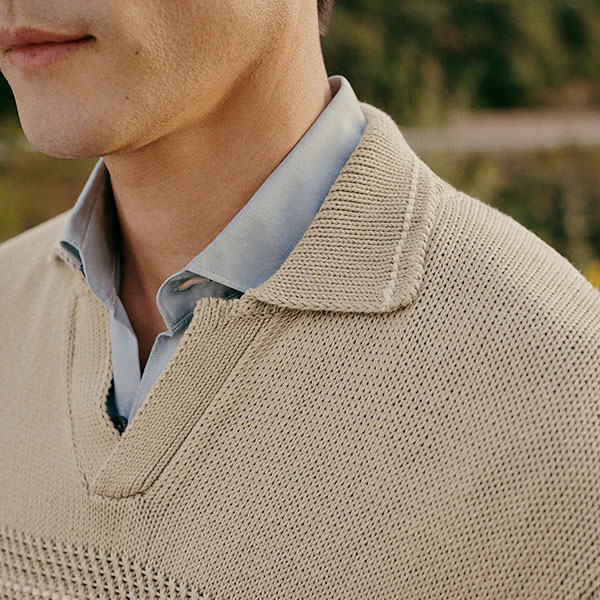
Photo: Canali Facebook page
There’s an hour, between the beach and the table, when the outfit must make a transition. Not a full change — an elevation. This is where the real art of dressing for summer lives: moving from one context to the next with the least apparent effort and the most visible effect. Northern Italy and the Côte d’Azur have refined this art to a level the rest of the world has been observing for decades without quite matching.
The polo remains the pivot piece of this transition. Sunspel’s Riviera polo — from a British house founded in 1860 — has become iconic for precise reasons: absolute simplicity, no visible logo, and Sea Island cotton quality that lets the wearer carry the piece rather than the other way around — much like 007. Gran Sasso, the Italian house from Abruzzo, offers polos in mercerised cotton or fine jersey with a quiet elegance that connoisseurs recognise immediately. Patrick Assaraf brings a more contemporary sensibility — refined technical fabrics, precisely calibrated cuts — that fits perfectly within this sophisticated terrace register.
For the bottom half, the lightweight cotton chino — in beige, olive, or terracotta — is the anchor piece; Italian brand Myths offers excellent options worth exploring. A well-cut short in quality fabric can substitute without loss of elegance, provided the length is right: always above the knee. Vilebrequin excels here, with linen trousers of remarkable lightness.
The linen shirt deserves its place in this context as well. Linen has the noble quality of creasing — and that creasing, far from being a flaw, is the mark of a living fabric that breathes and ages well. Eton offers superb versions, built with the same care as their dress shirts.
Dinner with friends — relaxed sophistication, summer edition
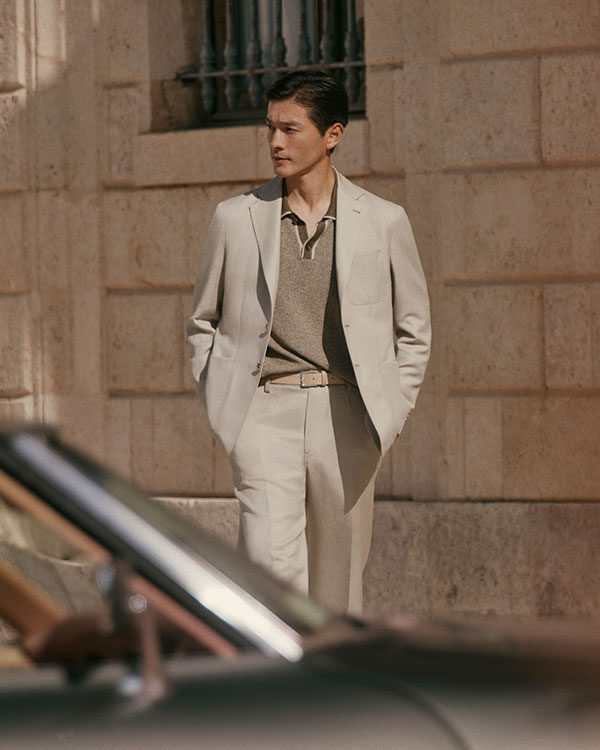
Photo: Canali Facebook page
Dinner with friends in summer is the most frequent context — and, paradoxically, the most poorly dressed. This is where the line between relaxed and negligent is thinnest. The most common mistake: confusing the informality of the occasion with permission to make no effort at all. The gentleman knows the opposite is true — it’s precisely because the setting is casual that care in dressing speaks louder. That said, if you’re unsure what to wear, your presence will always be more appreciated than a flawless outfit worn in your absence.
The spirit to aim for is that of an outdoor dinner in Tuscany or Provence: an open-collar linen shirt, slightly unstructured but clean, worn over well-cut cotton or linen trousers. The colours of the Mediterranean impose themselves naturally — off-white, terracotta, olive green, midnight blue. Avoid the plain t-shirt, not out of snobbery, but because a t-shirt without visual structure has no dialogue with the table, the light, or the other guests.
The loafer is the ideal shoe for this context. In tobacco suede, cognac leather, or navy, it combines summer comfort with the visual presence of a proper shoe. Crockett & Jones, the Northampton house founded in 1879, offers versions of impeccable quality. The rope-sole espadrille — in cotton canvas or natural linen — is an equally valid alternative for the most casual evenings, provided you choose a clean, well-constructed model.
One final detail, often overlooked: fragrance. In summer, the heavy, woody scents of winter give way to fresh, citrus-forward, or marine colognes — lighter, less persistent. It’s a transition as important as the fabric shift — and just as revealing of the care taken with the whole.
The picnic and the escape — French-style relaxed elegance

Photo: Samuelsohn website
There’s something intensely European about the idea of an elegant picnic — a tradition running from the English countryside to the Tuscan hills, from the vineyards of Burgundy to the calanques of Provence. It isn’t a meal thrown together on a makeshift blanket: it’s a deliberate staging of lightness, where the care given to the details — the basket, the tableware, the outfit — is precisely what makes the difference.
The gentleman’s picnic outfit follows a simple logic: maximum comfort without visual slackening. A lightweight cotton or linen chino is the foundation. Pair it with a fine-check shirt — vichy or madras, both quintessential summer fabrics — or a clean polo. Earthy, organic colours dominate naturally: sage green, ochre, rust, cream. Avoid fabrics that crease too aggressively at the seat, and cuts too fitted to allow easy movement.
The Italian reference asserts itself here with particular clarity. The elegantly dressed man of the Dolce Vita years — round glasses, open shirt, light trousers, espadrille — defined an ideal of sophisticated ease that has never truly been surpassed. This isn’t nostalgia. These codes endure because they respond to climatic and aesthetic demands that haven’t changed.
For footwear, the quality espadrille — known in Europe simply as such, rather than by its Canadian French equivalent — is the natural choice in this context. In natural canvas or braided jute, it is the Mediterranean summer shoe in its purest form.
The country weekend — the art of forty-eight hours
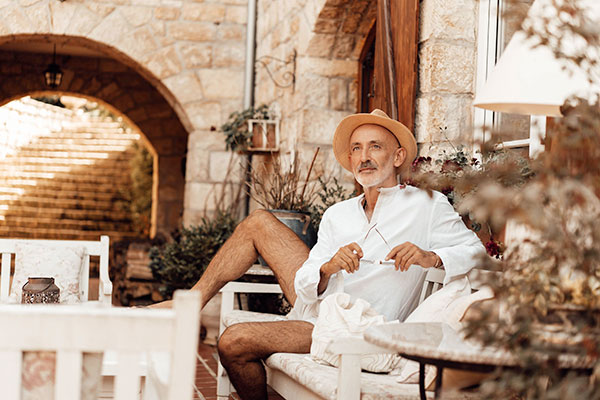
Photo: Pexels
A weekend away at a friend’s place — whether in the Laurentians, the Eastern Townships, Muskoka, Prince Edward County, Provence, or Tuscany — means accepting an elegant constraint: the bag must be light, but the wardrobe cannot afford to be careless. In forty-eight hours, the gentleman moves through breakfast on the terrace, a late-morning walk, a lunch that stretches into the afternoon, drinks at sunset, and dinner by candlelight. It isn’t the same outfit throughout — but it is the same man, recognisable from one moment to the next.
The solution isn’t in the number of pieces packed, but in their capacity to transform. A white linen shirt worn open over a t-shirt in the morning becomes, buttoned to the collar with a light jacket, a proper dinner look by evening. A lightweight cotton chino — in khaki, hazelnut, or British racing green — moves through all those hours without ever seeming out of place. That quiet versatility is what separates a considered wardrobe from an improvised suitcase.
The British heritage remains a useful compass in this context — not as a uniform to reproduce, but as a philosophy: fabrics that hold up to use, cuts that allow movement, colours that sit naturally within the surrounding landscape. In summer, this translates to an unstructured linen or cotton jacket — light, unlined, slipped on or off without ceremony. Barbour, whose lightweight jackets have endured a century of British countryside, offers versions that work as well on a gravel path as on a stone terrace.
For footwear, the rule is simple: neither too formal nor too casual. A suede loafer in sand or a light cognac Derby adapts to every surface and every moment of the day. The city sneaker, however handsome, introduces a dissonance in this register — it belongs somewhere else. And it’s precisely that sense of coherence, that refusal to betray the place you’re in, that marks a truly considered wardrobe.
Glamping — elegance in nature
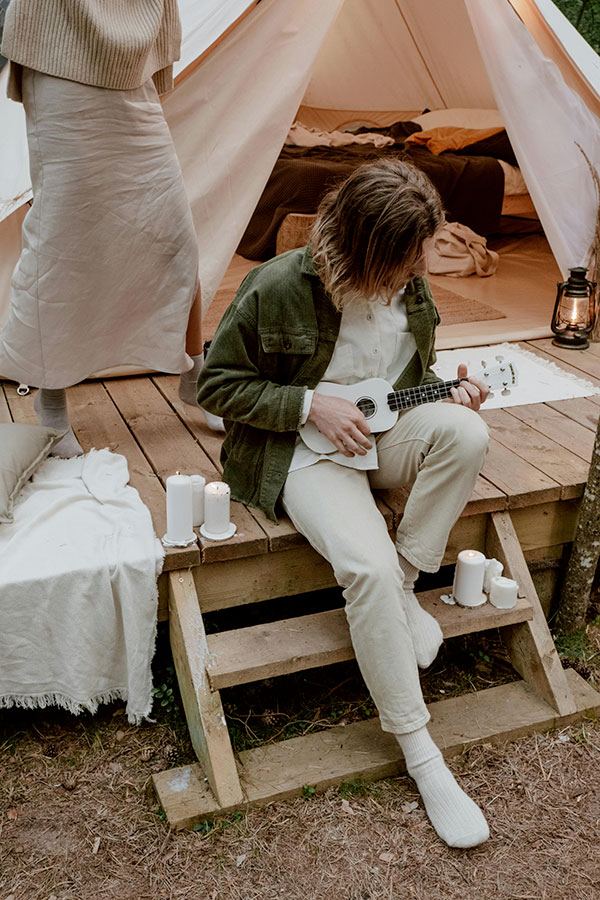
Photo: Pexels | Cottonbro
Glamping — the contraction of glamour and camping — has become in recent years a context in its own right, with its own sartorial codes. This isn’t a scout camp or a music festival: it’s a carefully considered experience in nature, and the wardrobe should reflect that. The challenge is precise: maintaining a polished visual presence in an environment where performance fabrics are a necessity, not a preference.
The key lies in the materials. Look for fabrics that combine performance with visual nobility: mercerised cotton, brushed technical nylon, lightweight merino. These fabrics manage moisture, resist abrasion, and hold their shape after a night in a tent or an Airstream — without ever reading as athletic in the wrong sense.
A lightweight nylon cargo pant — in its most pared-down version, without oversized pockets or exposed seams — is a valid option for active days. When the context allows, a technical cotton-stretch chino offers the same freedom of movement with considerably more visual presence. On top, a lightweight merino t-shirt is the piece no one notices, which is precisely its greatest quality. Look for a weight between 150 and 180g/m² — light enough for the heat, substantial enough not to be transparent. The Woolmark certification remains the most reliable quality benchmark.
By the fire in the evening, a mid-layer becomes essential. A boiled wool jacket or a lightweight quilted vest — in olive, navy, or charcoal — handles the temperature shift without betraying the spirit of the setting. Barbour, whose outerwear has endured over a century of British countryside, offers pieces that age with character rather than simply wearing out.
The summer suit — lightness and presence
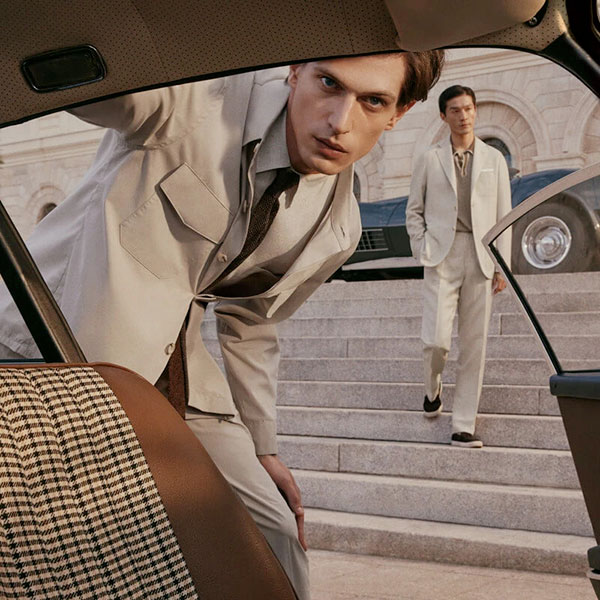
Photo: Canali Facebook page
The summer suit is one of the most misunderstood pieces in a man’s wardrobe. It gets accused of being uncomfortable in the heat, too formal for the season, ill-suited to the relaxed spirit of summer. These criticisms are all valid — but they’re aimed at the wrong suit. A well-chosen summer suit has nothing in common with its winter counterpart: it’s constructed differently, in different materials, to meet entirely different demands.
Fresco wool is the benchmark fabric — as we discussed in our piece on the gentleman’s spring wardrobe. Woven loosely, it allows air to circulate while preserving the structure and drape characteristic of wool. Harrisons of Edinburgh produces remarkable versions. Cotton hopsack — a gauze weave that gives the fabric a particular lightness and texture — is an equally valid alternative, with a slightly more relaxed character. For the warmest conditions, pure linen or a linen-cotton blend offers unmatched lightness, at the cost of creasing that should be embraced as a signature rather than endured as a flaw.
A summer suit’s construction favours lightness: half-lining or no lining, lightly unstructured shoulders, patch pockets rather than besom. Canali, the Italian house whose mastery of seasonal suiting is unmatched, embodies this ideal with remarkable consistency. Their collections are available at Clusier in Old Montreal and at Harry Rosen.
The summer suit palette moves away from navy and grey toward more luminous territory: beige, stone, light khaki, powder blue, off-white. Worn without a tie, over an open-collar linen shirt or a fine polo, these suits embody the relaxed elegance of the Mediterranean — an ease that isn’t the absence of care, but its most accomplished form.
The gentleman in full dress — formal summer occasions
Vernissages, corporate cocktails, award ceremonies, openings: summer doesn’t spare the gentleman from occasions that call for formal dress. These contexts demand more than terrace smart casual — but they don’t require a return to winter codes. The challenge is maintaining a formal presence without ignoring the heat.
The summer suit in fresco wool or cotton hopsack, discussed above, is the obvious answer here. Wear it with a white open-collar shirt for the more relaxed contexts, or with a lightweight silk tie — in grenadine or foulard — when the occasion demands it. A pocket square in off-white linen or printed silk is the detail that signals attention to the whole without ostentation.
Colour plays a different role in this register. Avoid tones that are too pale — they risk looking unkempt under cocktail lighting. Medium beige, deep powder blue, or light grey remain the safe choices. For outdoor evening events, a white or cream suit is acceptable — expected, even, in certain contexts — provided the cut is impeccable and the shirt perfectly pressed.
The formal summer shoe oscillates between a plain leather Derby — in cognac or burgundy rather than black, more in keeping with the seasonal palette — and a polished leather loafer. Avoid black in summer, not as an arbitrary rule, but because it sits in visual contradiction with the luminosity of the season.
Travel — holding the line in transit
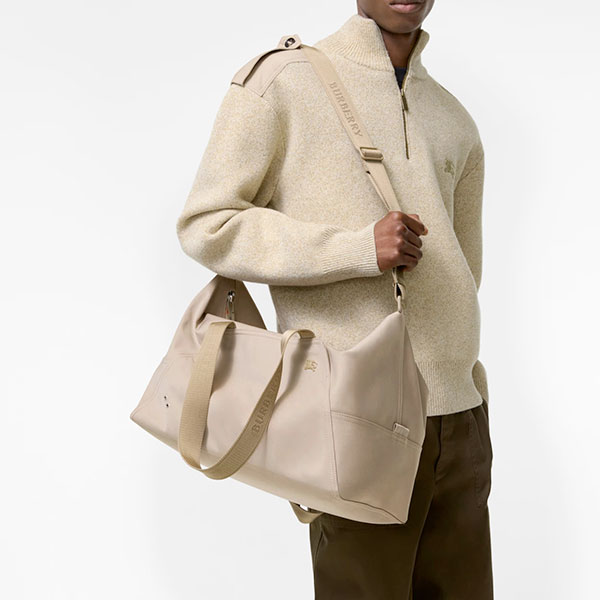
Photo: Burberry website
Travelling with elegance is one of the most demanding exercises in a man’s wardrobe. The air-conditioned cabin, the overheated hotel room, the crowded taxi, the sun-drenched terrace: within a few hours, the gentleman crosses radically different thermal and social contexts. The temptation is to sacrifice everything to comfort — and that’s precisely what the gentleman avoids.
The solution isn’t in multiplying pieces, but in their intrinsic quality. A well-cut stretch cotton trouser — Incotex, the Venetian house specialising in men’s trousers since 1951, is the definitive reference — holds up through hours of flight without showing fatigue. A lightweight cotton poplin shirt, worn open-collar, crosses time zones without losing its composure. An unstructured linen or cotton blazer, folded into the carry-on, recovers its shape quickly and instantly elevates any outfit.
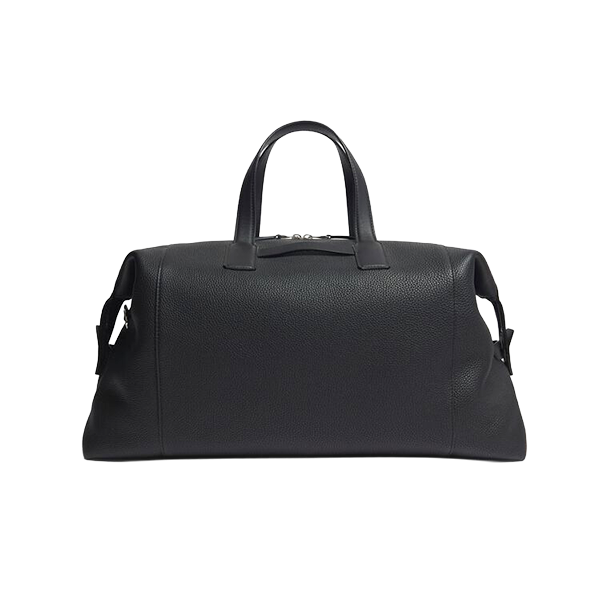
Photo: Dunhill website
The bag itself is a statement. A well-made piece without an oversized logo — skip the Louis Vuitton monogram — says something about its owner before he opens his mouth. The Burberry Storm weekender or the Dunhill 1893 Harness are the kind of pieces that speak quietly and carry well. Tumi, Globe-Trotter, and Rimowa are the benchmark houses for luggage.
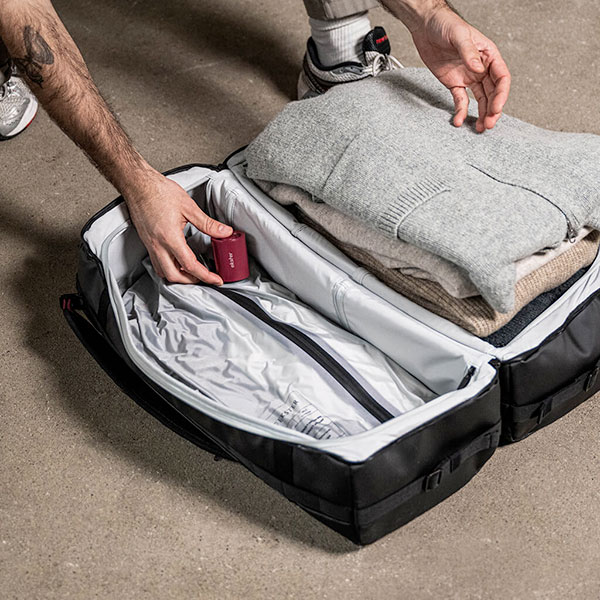
Ekster compression bags — the smart way to avoid baggage fees
Photo: Ekster
Inside the bag, organisation is a form of invisible elegance. Ekster has thought this logic through entirely: their waterproof, odour-resistant compression bags, paired with a cordless vacuum pump, significantly reduce the volume occupied by clothing — up to fifteen garments compressed into the space of five. It’s the solution for the gentleman who travels light without sacrificing the range of his wardrobe.
A note on the summer wedding
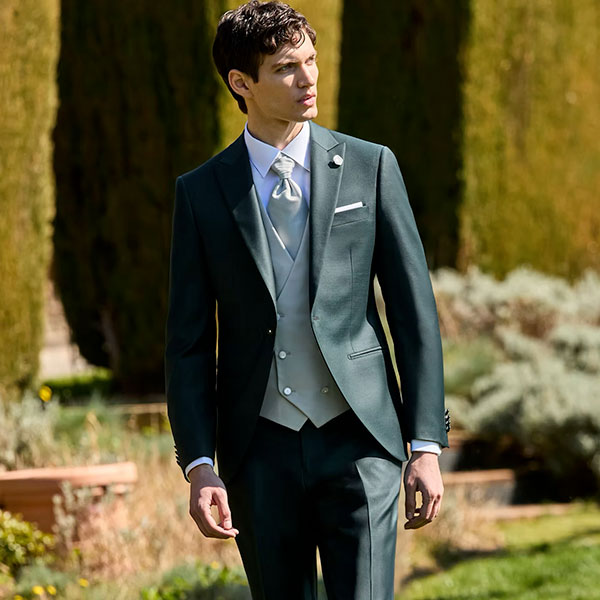
Photo: Luigi Bianchi
The summer wedding deserves a guide of its own — and it will have one. But a few principles bear stating now. The guest’s role, first: to honour the occasion without stealing the spotlight. A suit in a restrained colour — light navy, pearl grey, stone beige — with a white shirt and a lightweight silk tie is the most considered answer in most contexts. The groom has more latitude — but that latitude is exercised in precision, not extravagance. A cream or off-white suit, a linen pocket square, discreet cufflinks: the groom’s elegance is that of a man who dressed for someone else as much as for himself.
A note on golf
Golf has its own sartorial codes — rich and nuanced enough to warrant a dedicated guide, which is forthcoming. For now, the essential point: the golf course is not a licence to dress carelessly under the guise of sport. A logo-free polo, well-cut technical cotton trousers, and leather golf shoes — rather than the synthetic cleated version — are the foundation of a look that respects both the game and the other players.
Watches — six references for summer
The watch is the gentleman’s most personal accessory — and one of the few that crosses every season without ever being put away. In summer, it adapts more through the strap than the case: a honey or cognac leather, a NATO strap in striped cotton, a vulcanised rubber for nautical contexts. That small gesture — changing a strap — transforms a city watch into a summer companion without altering its character.
Six references deserve particular attention, each for a different reason.
Citizen Endeavour Chrono
Reference: CA4730-08E
Photo: Citizen
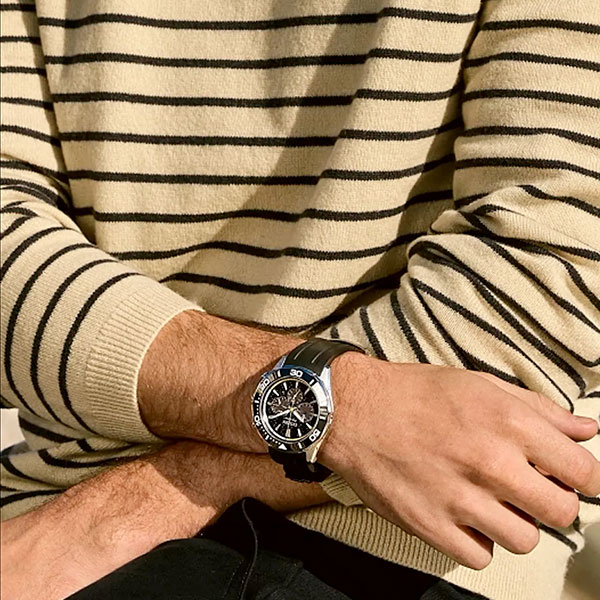
Citizen’s Eco-Drive proposition — celebrating its 50th anniversary in 2026 — is compelling in its logic: a solar-powered watch, recharged by any light source, that never needs a battery or winding. In summer — long days, outdoor activities, abundant light — this technology finds its full purpose. The Endeavour Chrono (currently being tested by our team) sits perfectly within the nautical spirit we’re after. It’s the watch you never have to think about — which frees the mind for everything that matters.
OMEGA Seamaster Diver 300M
Reference: 210.32.44.51.01.002
Photo: OMEGA
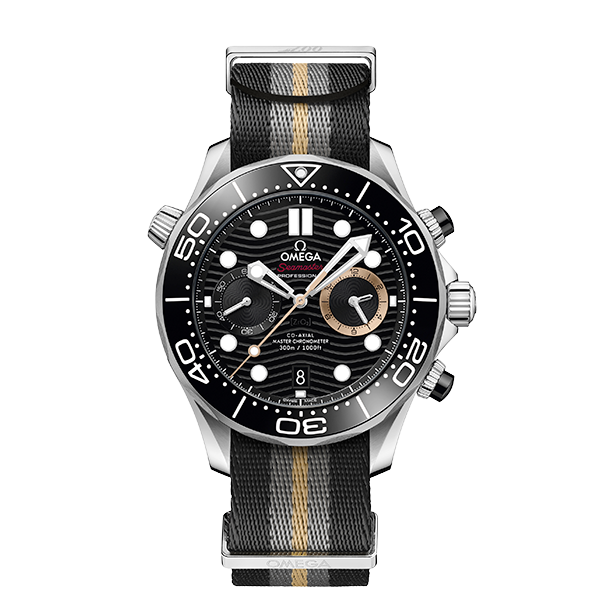
Born in 1993 and elevated to icon by James Bond since GoldenEye, the Seamaster Diver 300M is the nautical watch of choice for those unwilling to sacrifice elegance for performance. Water-resistant to 300 metres, fitted with a unidirectional ceramic bezel and its signature wave-pattern dial, it moves from the bottom of the pool to a terrace dinner without missing a beat. The NATO strap — as seen on this new OMEGA inspired by the 007 First Light video game — shifts its character effortlessly for summer.
IWC Aquatimer
Reference: 328801
Photo: IWC Schaffhausen
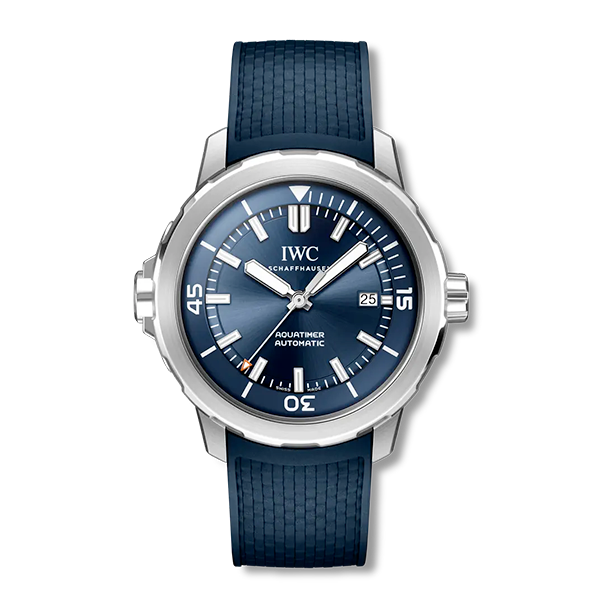
Less known to the general public than the Seamaster, the IWC Aquatimer is the connoisseur’s choice in dressed dive watches. Its inner bezel — a rotation mechanism housed beneath the crystal — is an elegant technical solution that immediately sets the piece apart. In its Automatic version in steel with rubber strap, it’s as comfortable on a sailboat as it is on the wrist of a man in a light suit.
Longines HydroConquest
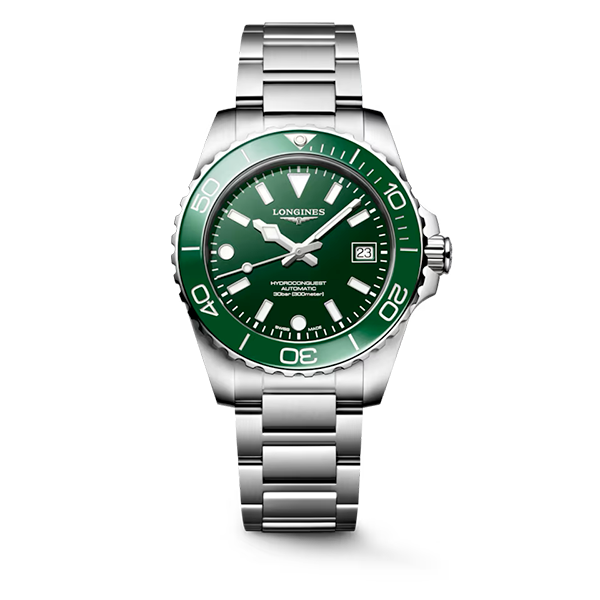
Reference: L3.788.4.06.6
Photo: Longines
For those seeking a nautical watch with character without the entry price of the major manufacturers — it shares some family resemblance with the OMEGA Seamaster — the Longines HydroConquest is an honest and elegant answer. Founded in 1832, Longines offers here a 300-metre diver with a reliable manufacture movement, in a clean case that doesn’t try to imitate its more expensive competitors. In deep blue or forest green, it’s one of the finest watches in its category.
Nomos Glashütte Club Campus
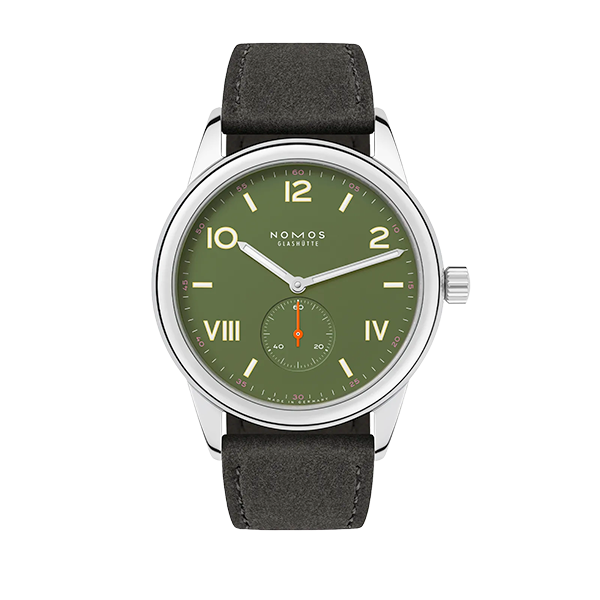
Reference: 739
For those who favour restraint over sport, the Nomos Glashütte Club Campus is a watch of remarkable visual lightness. Made in Glashütte, Saxony, in the most rigorous tradition of German watchmaking, it offers a clean dial, fine indices, and a movement visible through the sapphire caseback. Its natural leather strap, which develops a beautiful patina with wear, is among the finest in its category. It’s the watch you pair with a white summer suit or a Sunspel polo — one that asks nothing more of itself than to be exactly what it is.
Hamilton Jazzmaster Open Heart Auto

Reference: H32675540
Photo: Hamilton
Hamilton has sustained its tradition as Hollywood’s watchmaker for decades — over 500 productions have worn the brand on screen. The Jazzmaster Open Heart is its most elegant expression: its smoky blue dial reveals, through a precision aperture, the automatic H-10 movement that powers it — offering the rare spectacle of visible mechanics without tipping into the ostentation of a full skeleton. Steel case at 40mm, anti-reflective sapphire crystal, 80-hour power reserve — the specifications match the visual presence. It’s worn by Colin Firth in Steven Spielberg’s latest film, Disclosure Day (2026), releasing June 12th, which says everything about its register: the watch of a man who knows exactly what he’s wearing without needing to explain it. Available on the Hamilton website.
Sunglasses — the most exposed piece
Sunglasses are the most visible accessory on the face, and one of the few that doesn’t change during the course of a day. The choice of frame commits the entire outfit — and the face. A few principles apply: the shape should contrast with the face (a round frame softens angular features, a rectangular one structures a rounder face), the lens colour should complement the outfit’s palette without dominating it, and optical quality should never be sacrificed for aesthetics.
Ray-Ban Aviator 3025

Photo: Top Gun Facebook page
Designed in 1936 for U.S. military pilots, the Aviator 3025 has crossed nine decades without ageing. Its gold or silver metal frame, slightly convex large lenses, and distinctive double bridge make it one of the most imitated frames in the world — which is a form of consecration in itself. Tom Cruise has worn them in Top Gun since 1986, and their return to screens in 2026 is a reminder of what we already knew: some things simply don’t need reinventing. They suit oval and square faces particularly well, and work naturally with most summer outfits. This is the benchmark against which everything else is measured — and everything that follows takes its cues from here, consciously or not.
Oliver Peoples Cary Grant
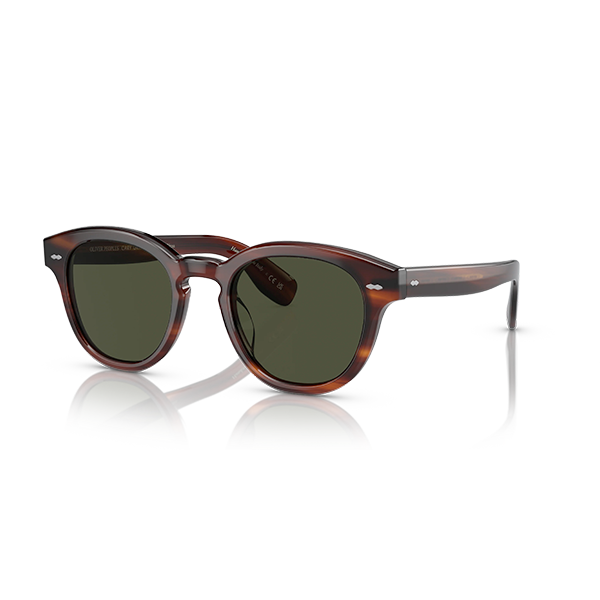
Photo: Oliver Peoples website
The California house Oliver Peoples has built its reputation on frames of remarkable restraint and quality, often drawn from Hollywood’s archival references. The Cary Grant model — named in tribute to the actor whose style remains an absolute reference — offers a slightly rounded acetate frame in tortoise or matte black that moves through any context without ever seeming out of place. It’s the frame of a man who knows what he wants without needing to announce it.
Persol 714
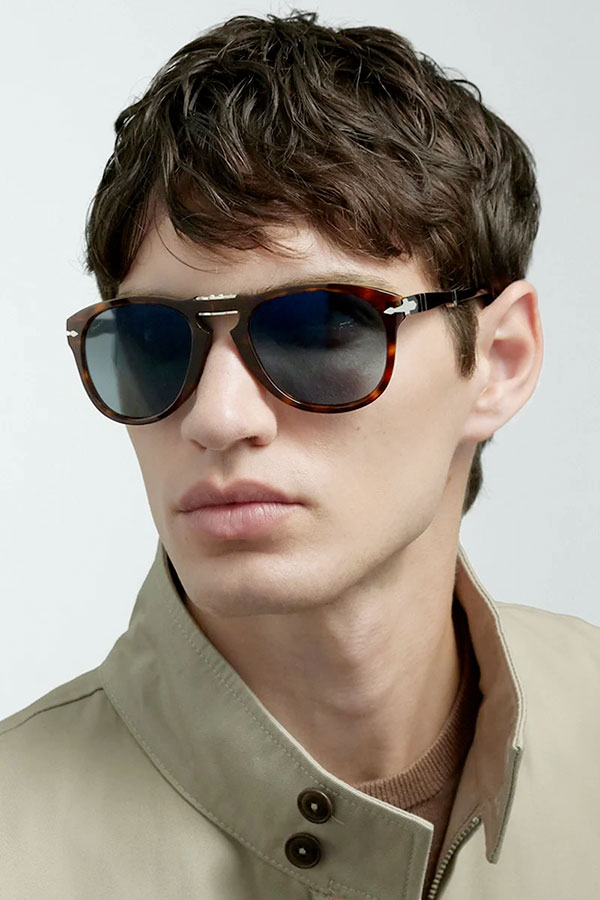
Photo: Persol website
The Persol 714 is Steve McQueen’s frame in The Thomas Crown Affair — and that single reference explains its status entirely. Folding, fitted with the patented Meflecto system that adapts the temples to the wearer’s face, it’s a piece of engineering as much as elegance. In havana tortoise with brown gradient lenses, it’s one of the most beautiful and most wearable frames that exist.
The Barton Perreira Joe
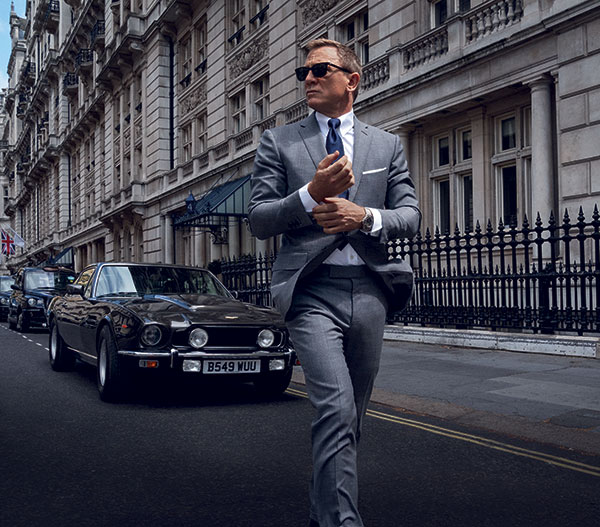
Photo: © 2021 DANJAQ, LLC and MGM. All rights reserved.
Founded in Los Angeles in 2007, Barton Perreira produces every pair by hand in Japan, through a six-to-eight-week manufacturing process that prioritises finish, feel, and fit. The Joe model — rectangular zylonite acetate frame, mineral glass lenses, hand-engraved temples — is the one Daniel Craig wore in No Time to Die, which says everything about its register. Angular without aggression, understated without anonymity, it’s the frame of a man who knows exactly what he’s wearing. The house’s Oxford is the most accomplished summer variation in their current lineup.
The Serengeti range
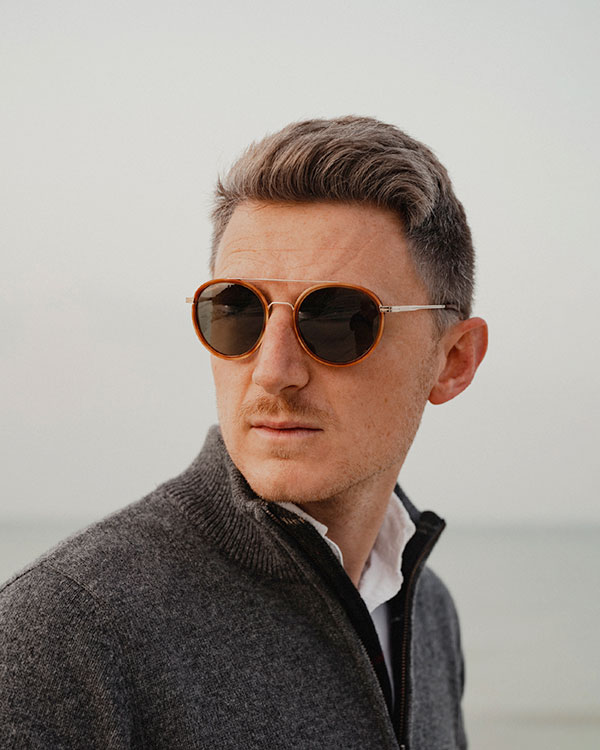
Photo: Serengeti Facebook page
Serengeti was the first house to develop photochromic polarised lenses for outdoor use — a technology born in collaboration with Corning, the world leader in precision glass. Their navigator-style models, in clean metal frames with wire-core adjustable temples, carry that heritage forward: borosilicate mineral glass lenses, photochromic and polarised, 20% lighter than standard glass. This is the active gentleman’s eyewear — driving, sailing, on the terrace — for those who refuse to choose between optical performance and visual presence. Refer to the current collection on their website to find the model best suited to your face.
Shoes and accessories — the punctuation of the outfit
Summer footwear is where the gentleman most often underinvests — and it’s precisely where the coherence of a wardrobe reveals itself. In summer, feet are more exposed, materials are taxed more heavily by heat and humidity, and shoes are more visible because the rest of the outfit is lighter. A poorly chosen pair destroys an otherwise impeccable look.
The loafer
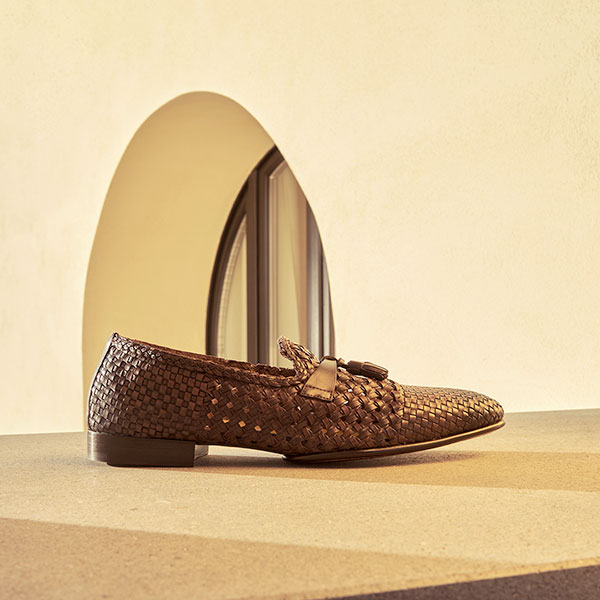
Photo: Doucal’s Facebook page
The centrepiece of the summer wardrobe. In tobacco suede, cognac leather, navy, or brushed burgundy, it moves through every summer context with an ease few other shoes can claim. Crockett & Jones, Tod’s, and Doucal’s offer versions of impeccable quality. Worn without socks — or with invisible socks if anatomy requires — and maintained with the appropriate suede or leather cream.
The deck shoe
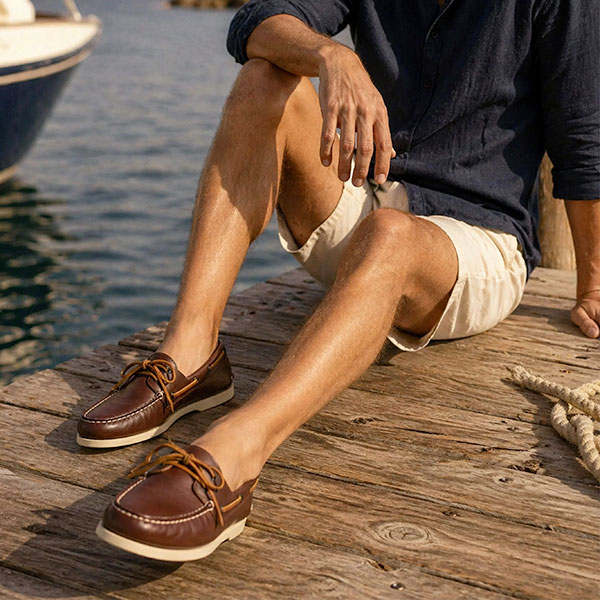
Photo: Sperry website
The essential nautical reference. Sperry Top-Sider has made it their signature since 1935 — their lace-up moccasin with white non-slip sole is instantly recognisable. In honey leather or navy canvas, it moves from the deck of a sailboat to the terrace of a yacht club without transition. Choose quality leather over synthetic, and accept that it will patina with use — that’s precisely what gives it character.
The espadrille
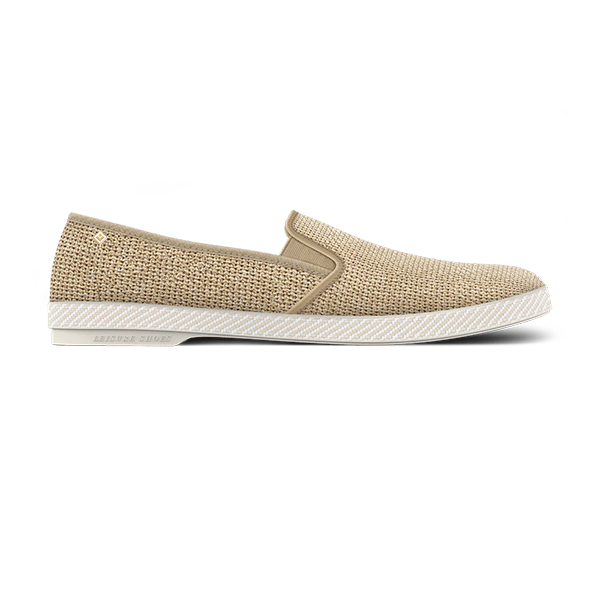
Photo: Rivieras website
The Mediterranean summer shoe par excellence. Born in the Pyrenees, adopted by the Spanish and French coasts, it’s the piece associated with sun-drenched terraces, morning markets, and pre-dinner drinks in the open air. In its most noble form — as offered by Loro Piana, the Piedmontese house whose relationship with exceptional raw materials is unmatched — it comes in linen, combed cotton, or soft leather, with a hand-braided rope sole. A find worth making on a future trip to Paris or Milan. For those staying on this side of the Atlantic, Rivieras — a French house born in Biarritz, Basque-made, shipping to Canada — offers premium canvas espadrilles of remarkable honesty and quality. In both cases: neutral tones — white, navy, natural beige — and keep them away from water, which quickly degrades the rope sole.
The belt
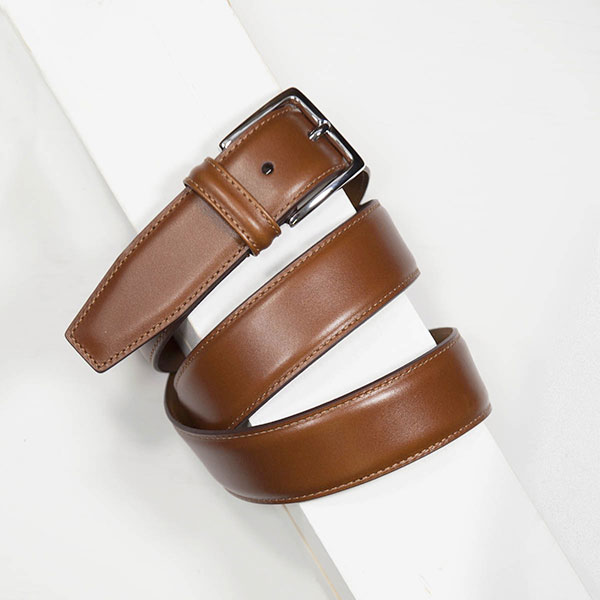
Photo: Anderson’s website
The most overlooked summer accessory — and one of the most revealing. It must match the shoe in tone and material: cognac leather with cognac shoes, tobacco suede with suede loafers. Avoid oversized buckles or visible logos — they belong to a different register entirely. Charvet, Trafalgar, and Anderson’s offer clean, durable versions that outlast the seasons without effort.
The beach and weekend bag
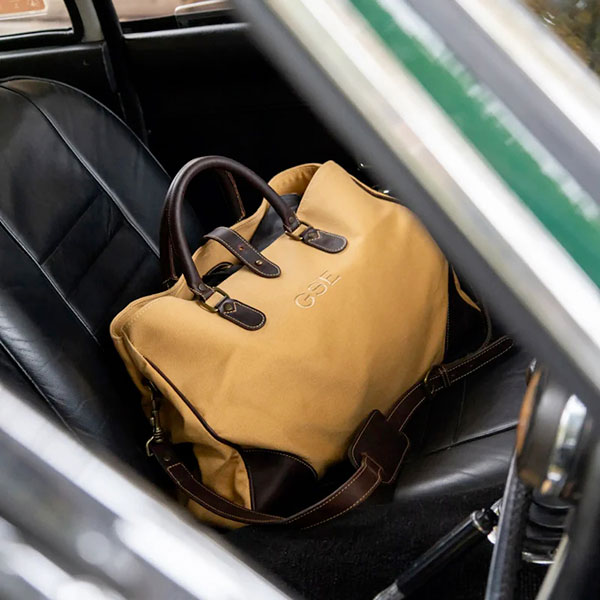
Photo: Ettinger London website
These deserve the same attention as the rest. A heavy natural cotton tote, a waxed canvas bag, or a quality raffia carryall — provided it’s clean and well-constructed, like those from Ettinger and Ekster — completes the outfit without overwhelming it.

Photo: Ekster
Avoid plastic or shiny synthetic bags — they betray the care taken with everything else.
The bracelet
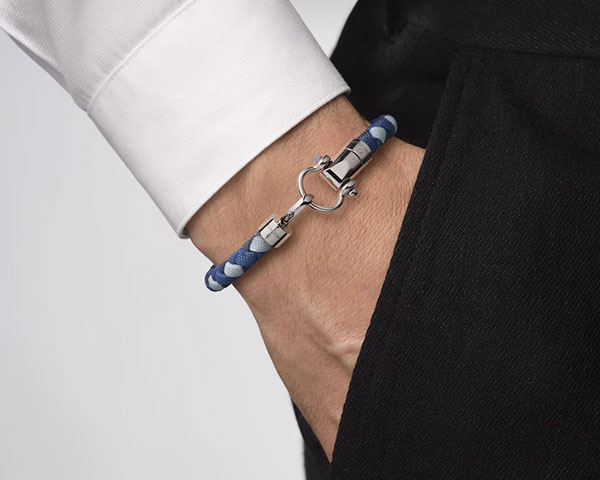
Photo: OMEGA website
A personal note that summer permits more than any other season. A braided rope bracelet — in navy, white, and red, in the tradition of regatta bracelets worn for generations in sailing clubs — or a natural braided leather adds a touch of character to a wrist the heat often leaves without a cuff. The key is restraint: a bracelet earns attention because it’s beautiful, never because it’s busy. OMEGA makes some beautiful ones.
Where to find
The Eton, Gran Sasso, Luigi Bianchi, Samuelsohn, Canali, Patrick Assaraf, Doucal’s, and Myths collections are available at Clusier in Old Montreal, as well as at Harry Rosen for select houses. Orlebar Brown and Vilebrequin are available on their respective websites — Vilebrequin also has a boutique in Montréal. Sunspel is available online and at Clusier. For watches, OMEGA, IWC, and Longines boutiques are present in Montréal, several of them at Château d’Ivoire; Citizen and Nomos are available through select specialty retailers. Rivieras espadrilles and Crockett & Jones loafers are available online and through select multi-brand boutiques.
Note: When we learn that an error has slipped into our site, we report it by correcting it. If you notice an error, please inform us by contacting us through our Contact us page.