
Lillet: the essential ingredient in James Bond’s Vesper Martini
Discover the Lillet, this popular Bordeaux aperitif found in the James Bond’s famous Vesper Martini cocktail.
Published on · Updated on | 6 minutes of reading
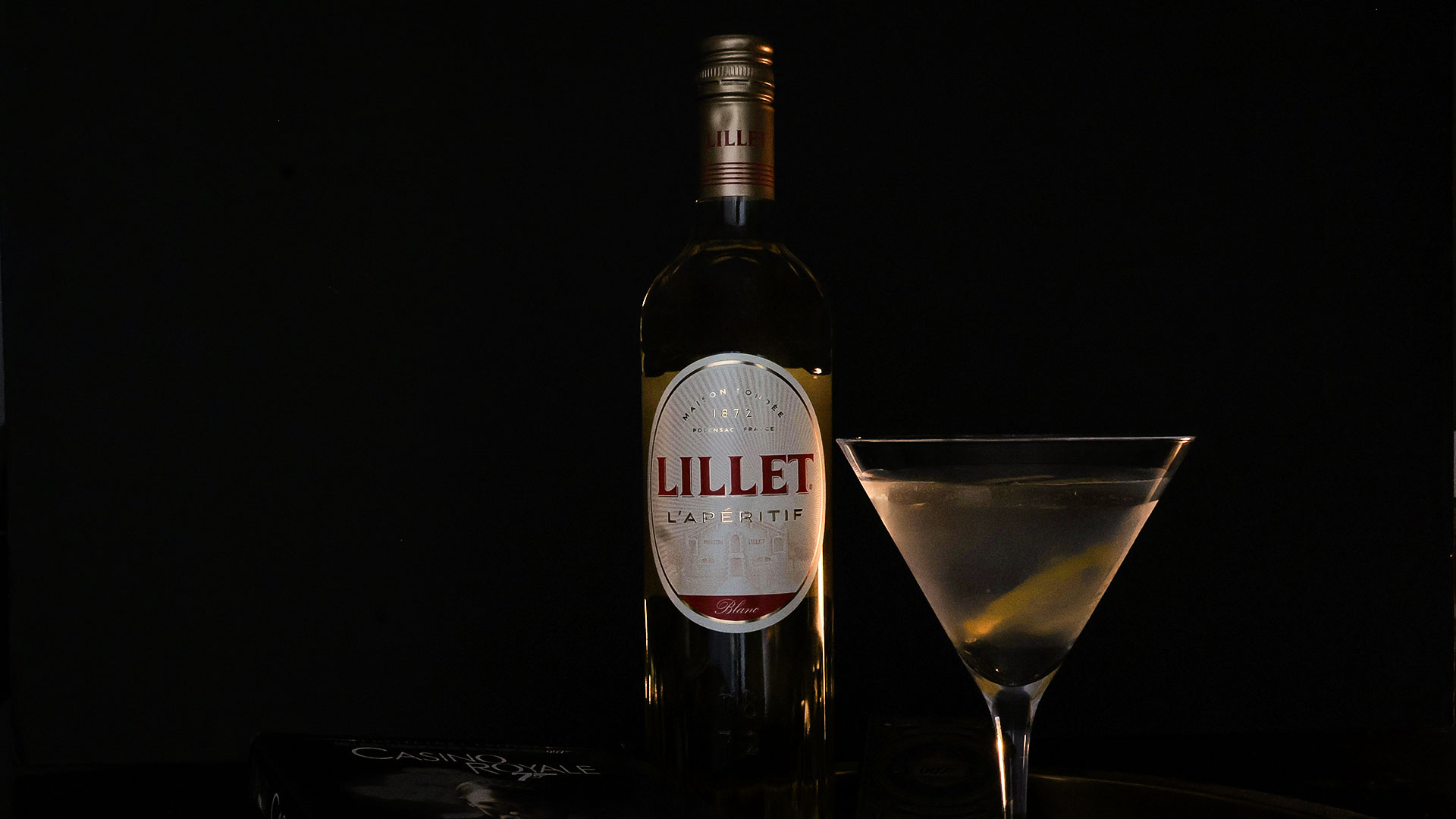
The Vesper Martini, the iconic cocktail of secret agent 007, first appeared in Ian Fleming’s book Casino Royale—before becoming a symbol of Bond’s style in the films. But do you know what sets it apart from the traditional Vodka Martini? It’s the addition of Lillet, a Bordeaux-based wine aperitif that gives the cocktail aromatic depth, measured sweetness and a floral-citrus signature. A discreet but crucial ingredient: without Lillet, the Vesper would not have the same elegance and, above all, the same taste. Learn more about Lillet with me.
The history of Lillet
The Lillet company was founded in 1872 in Podensac, south of Bordeaux in the Gironde region, by brothers Raymond and Paul Lillet. They drew inspiration from the work of the Father Kermann, a doctor who returned from an expedition to Brazil under Louis XVI, bringing back exotic plants and cinchona bark—a key ingredient in medicinal tonics of the time. Bordeaux, which was at the time an important commercial port for the West Indies, became the ideal place to combine local wines with aromatic plants from elsewhere.
The initial product, Kina Lillet, was a more bitter aperitif wine made from white wine infused with cinchona bark and herbs.
In 1946, it was introduced to the United States by importer Michel Dreyfus, which gave the product another boost. As proof of this, Lillet Rouge was developed by Pierre Lillet in 1962, specifically for the American market.
In the 1950s, it quickly gained popularity, particularly during the Roaring Twenties, and then spread abroad, where it was adopted by England and European high society. The Duchess of Windsor is credited with playing a role as a socialite icon who popularized Lillet at Fauchon and in Parisian salons and grand hotels (Georges V, Ritz Paris), thus reinforcing its aristocratic and international aura. Lillet subsequently established itself on the French Riviera in order to meet American demand.
Lillet and Vesper — connecting note
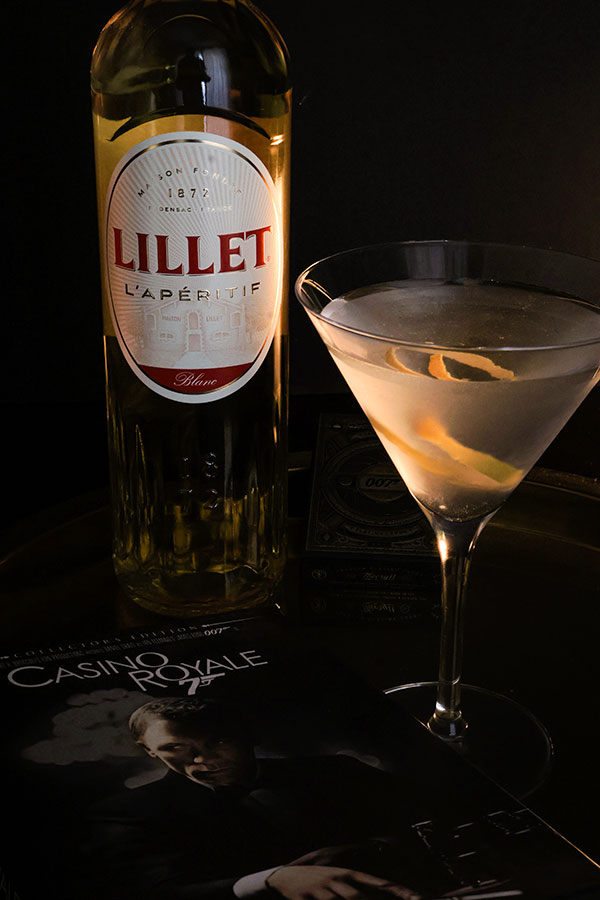
Photo: Normand Boulanger | Gentologie
Ian Fleming specified the use of Kina Lillet in the original Vesper martini recipe in the Casino Royale book in 1953. Today, modern bartenders use Lillet Blanc; according to connoisseurs who have tasted the original version, the difference in bitterness is noticeable, which is why I refer you to our article dedicated to the Vesper Martini, as the aim here was to explore Lillet (its history, expressions and aromatic role) without repeating the entire study of the cocktail.
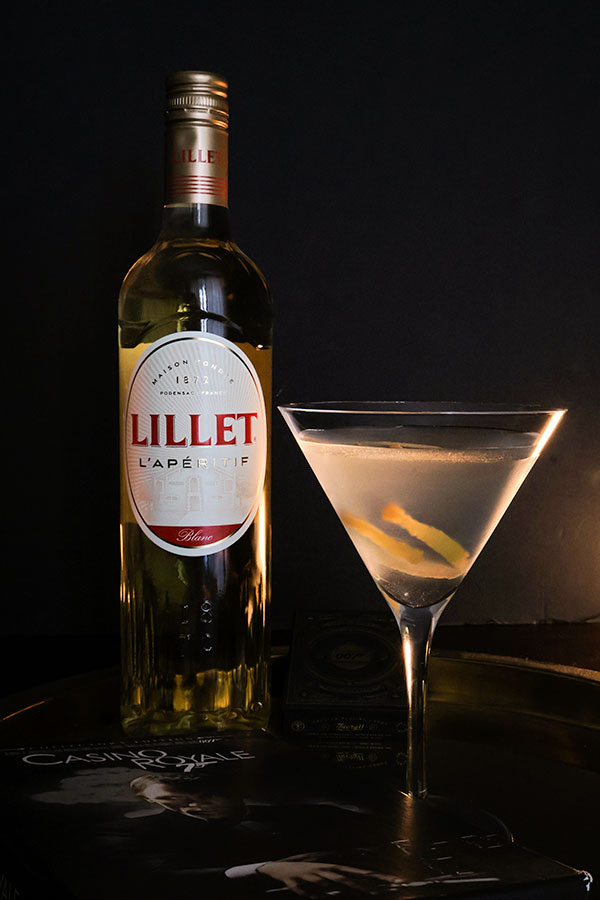
Photo: Normand Boulanger | Gentologie
Evolution and change in the recipe
The Lillet Frères company was bought in 1985 by Bruno Borie, a prominent member of the famous Borie family (owners of several Bordeaux châteaux). He invested in the company’s production facilities and relaunched the brand in 1986 under a new name and with new packaging. The original name, “Kina Lillet,” was derived from the Peruvian name for cinchona bark, kin-kina. “Kina” was inspired by the name and essence of quinine, reduced to creating a light, fruity and syrupy drink designed to appeal to modern palates. That same year, in order to adapt the brand to changing tastes, the amount of quinine in Lillet was significantly reduced and the word “Kina” (meaning “quinine” in French) was removed from the brand name and replaced simply with “Blanc”. Then, in 2008, it was sold to Ricard (a subsidiary of the Pernod-Ricard group).
The Rosé version, launched in 2011 and made from a blend of red and white wines, has enriched the range to meet contemporary mixology and aperitif trends. Lillet Rosé is bottled immediately to preserve its characteristic freshness and liveliness, unlike Lillet Rouge and Blanc, which are aged in oak casks.
Lillet in 2025: A new look, the same spirit
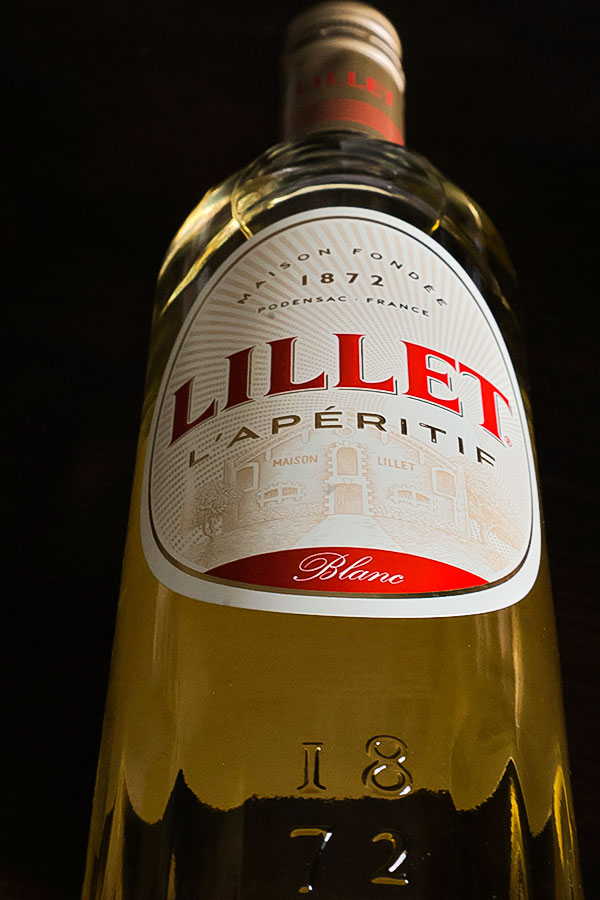
Photo: Normand Boulanger | Gentologie
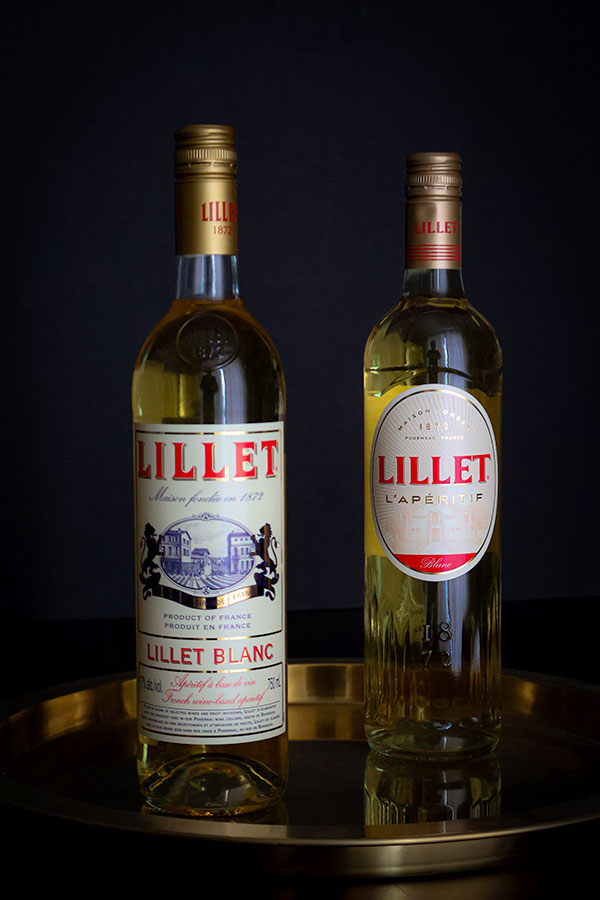
Discover the latest Lillet bottle: a sophisticated and elegant design that pays tribute to the Maison de Podensac. Also noteworthy are the red doors and tree-lined courtyard that reveal the Maison Lillet, witness to its history since 1872. From the oval gate to the arched doors, iconic elements of the Maison Lillet have inspired this redesigned bottle.
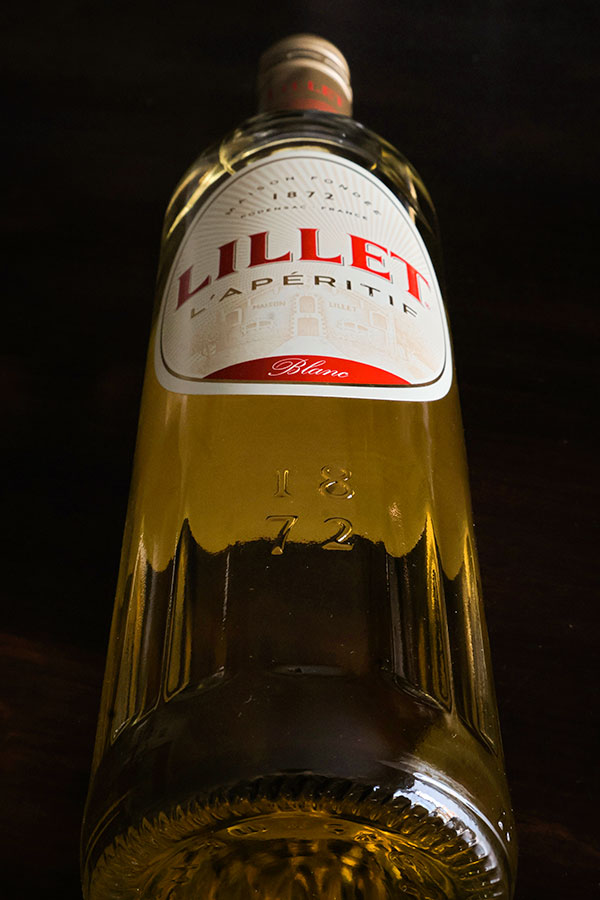
Photo: Normand Boulanger | Gentologie
The container reflects the same duality as the liquid: tradition and modernity—a visual choice that helps the brand position itself in the world of contemporary bars and gourmet restaurants.
From raw material to bottle: method and grape varieties
Lillet is essentially a wine-based aperitif: approximately 85% blended Bordeaux wines (usually whites from Bordeaux grape varieties such as Sémillon, Sauvignon Blanc and Muscadelle), complemented by 15% fruit macerations/liqueurs and cinchona bark.
Notable production points:
- Separate infusions: each fruit/peel is cold-infused to preserve its delicate aromas.
- Long maceration: several weeks to fully extract the essences.
- Blending and ageing: some blends are aged in oak barrels (2–4 months) to gain roundness.
- Sustainable approach: fruit residues are recycled into local compost.
The three expressions — explained
Lillet blanc (the classic)
- Profile: a modernized classic—round, citrusy, floral.
- Probable grape varietal and method: Sémillon, Sauvignon, Muscadelle; aged for 2 to 4 months in oak barrels.
- Nose: candied citrus (orange), white flowers, light honey.
- Palate: full-bodied, smooth texture, soft attack, orange peel and slight quinine bitterness.
- Serving and uses: very chilled, over a large ice cube or in a cocktail (Lillet Spritz, Vesper Martini).
- Pairings: oysters, smoked salmon, fine tartares, triple-cream cheeses.
SAQ Code : 953091
Lillet Rosé
- Profile: modern, lively, fruity—designed for mixology.
- Grape varietal and method: blend of white wine and natural infusions of citrus fruits, quinine and red berries; no barrel ageing.
- Nose: strawberry, raspberry, orange blossom, pink grapefruit.
- Palate: fresh, light acidity, notes of grapefruit and red berries.
- Serving and uses: very chilled, spritz, long cocktails; excellent with sashimi and summer salads.
Lillet Rouge
- Profile: structured, more tannic, spicy—the most “wine-like” version.
- Probable grape varietal and method: blend of Bordeaux reds and natural infusions of citrus fruits (sweet and bitter oranges), quinine and other fruits; the century-old recipe is kept secret; aged for 2 to 4 months in oak barrels. Nose: ripe black fruits, orange peel, vanilla, spices.
- Palate: supple tannins, ripe fruit, orange zest, woody notes.
- Serving and uses: slightly chilled (12–14°C), to be enjoyed in small glasses or as a short aperitif, with cold meats, mature cheeses or chocolate desserts.
Storage:
Like many aperitifs, this product should be stored in the refrigerator and served very cold, between 6 and 8 °C.
In practice: serving and recipes with Lillet
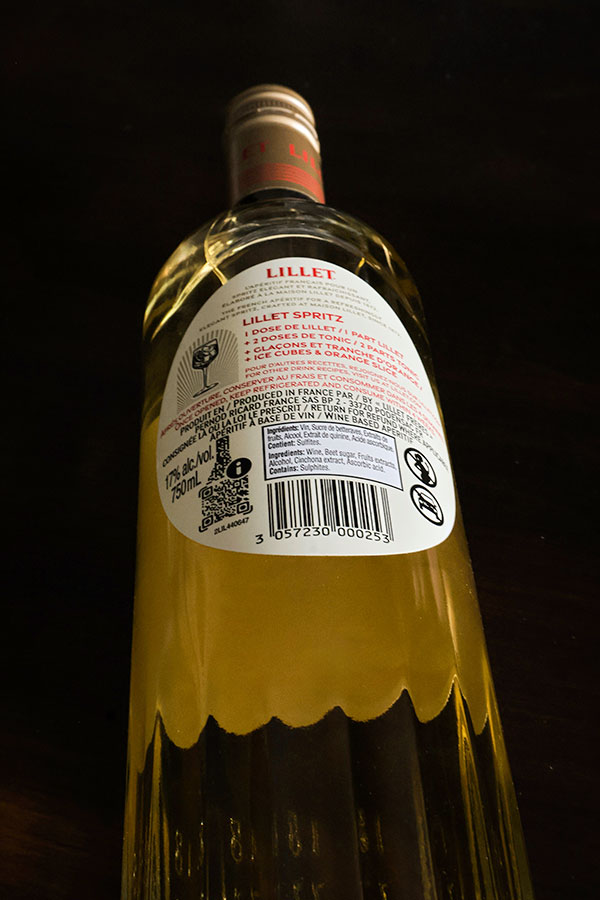
Photo : Normand Boulanger | Gentologie
Lillet Spritz
- 50 ml (1 part) Lillet Blanc
- 100 ml (2 parts) tonic water
- A slice of cucumber, strawberry & mint leaves
- Ice cubes
- Serve directly in a wine glass.
- Pour the Lillet Blanc into a glass filled with ice cubes.
- Top up with tonic water, then add a slice of cucumber, chopped strawberries and a mint leaf.
- Enjoy!
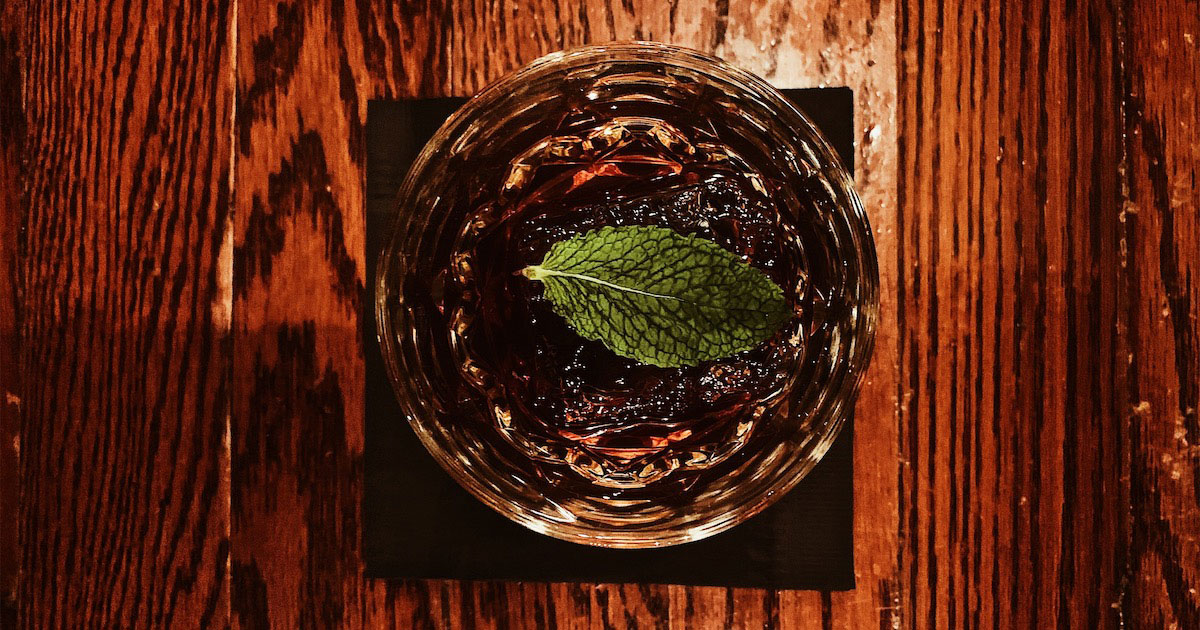
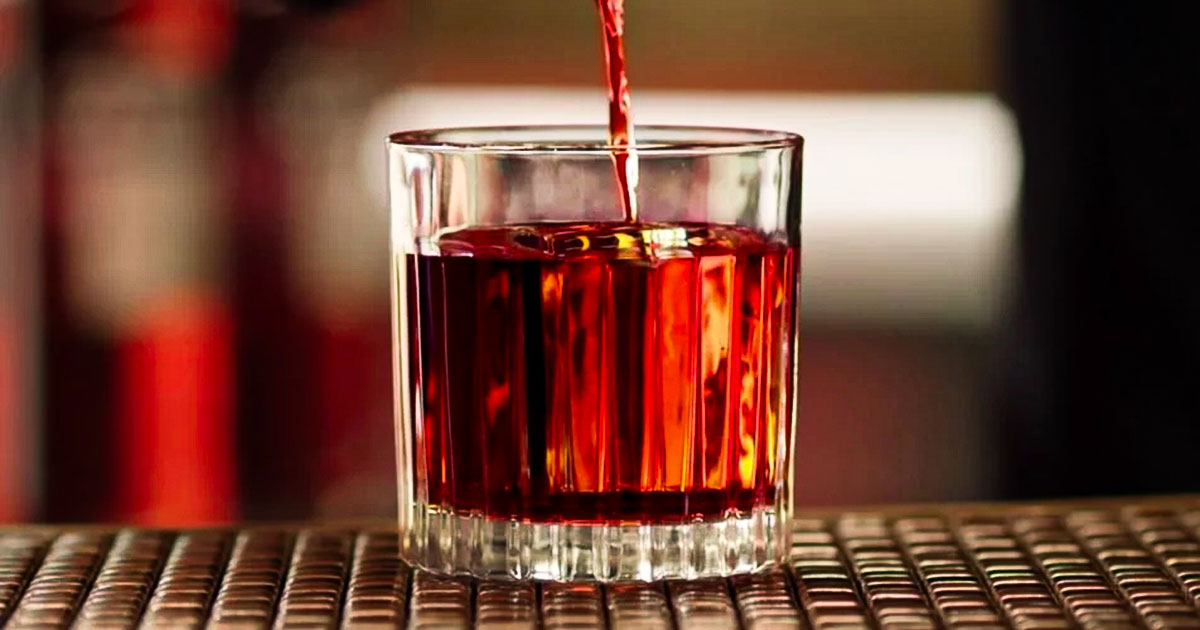
Twist on the Negroni: replace the vermouth with Lillet Rouge for a fruity-spicy touch.
Enjoy! Don’t forget to try the Vesper Martini recipe in this article.
Share the post "Lillet: the essential ingredient in James Bond’s Vesper Martini"
Note: When we learn that an error has slipped into our site, we report it by correcting it. If you notice an error, please inform us by contacting us through our Contact us page.