
How to Furnish Your Home Like a Gentleman
Living room, office, bedroom and more — a complete guide on how to furnish your home like a gentleman, with intention, style and character.
Published on | 27 minutes of reading
Moving day is often July 1st, at least for our Québec readers, but it can happen any time of year. Furnishing your home like a gentleman is a lifelong endeavour. Placing your furniture is not a trivial act — it is the first concrete decision about how you want to inhabit the world. A gentleman does not accumulate: he chooses. He does not decorate: he composes. Also, the photos in this article are not all perfect, but I preferred to illustrate it with real photos rather than lifeless 3D renderings.
General Rules for Furnishing Your Home Like a Gentleman
Your interior is, contrary to what you see endlessly on the social media feeds of various designers, a place where you dwell, live, and inhabit. It is not an RH catalogue or an AD (Architectural Digest) magazine spread — it must represent you, display fragments of your moments, what you hold dear. A home that displays only lifeless trinkets may be very beautiful, but how terribly dull.
Stop accumulating and piling things up constantly (yes, I tell myself this too, especially with the products we receive). Do a thorough clean-out at least once a year and get rid of (through donation or resale) the things you have in triplicate or quadruplicate that you never use.
Lighting
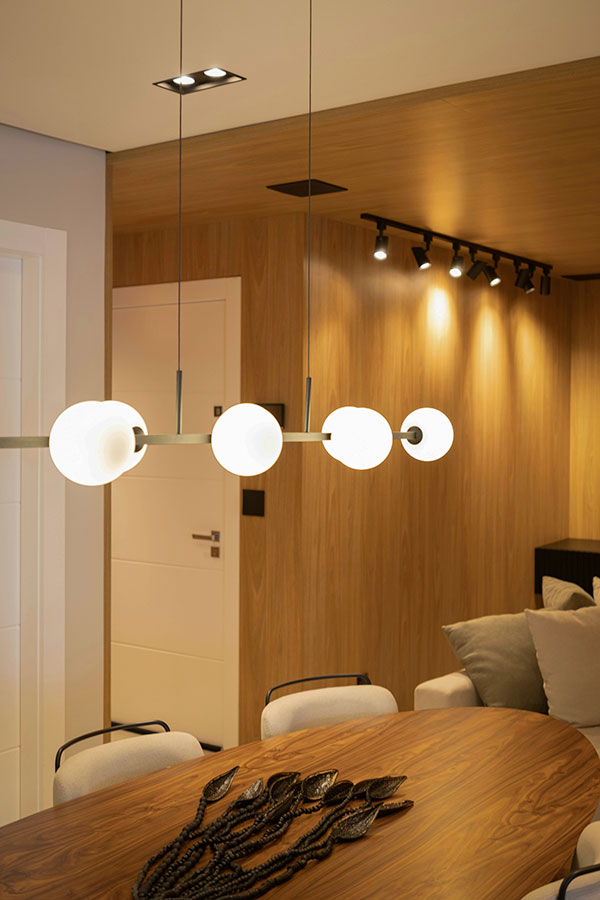
Photo: Caroline Badran | Unsplash
You want something warm and dimmed — your home is not an operating room where you need to see every micro-detail. You need a warm ambiance, not a cold one. That said, bright lights should be available for emergencies or when you are doing household tasks.
Plants
A gentleman who keeps a living plant in his home — and tends to it — says something about himself. A well-chosen, well-placed plant brings an organic texture that no decorative object can replicate. There is no need for an urban jungle: one imposing plant in a understated pot is enough. A fiddle-leaf fig, a monstera, a sansevieria — choose according to your light conditions, and treat it like a piece of furniture in its own right.
Consistency Between Rooms
Each space can have its own personality, but the whole must tell a coherent story. If your living room features dark wood and leather, your office should not be in white melamine. Materials and tones respond to one another from room to room — that is what distinguishes a composed interior from one that is simply furnished.
Art on the Walls
Not generic prints bought online because they match the sofa. An original work, even a modest one, a drawing by an artist friend, a poster from an event that mattered — something with a story. Your walls speak: make sure they tell yours.
You Do Not Need a Big Space to Live Large
A 3½ in Montréal (like the one I live in as I write these lines) or Toronto, a studio in New York, Paris or Québec City, a shared apartment — these are the realities of many men, and they absolutely do not prevent you from having a gentleman’s interior. This guide is not reserved for owners of 10,000-square-foot condos. It adapts to your space, whatever it may be.
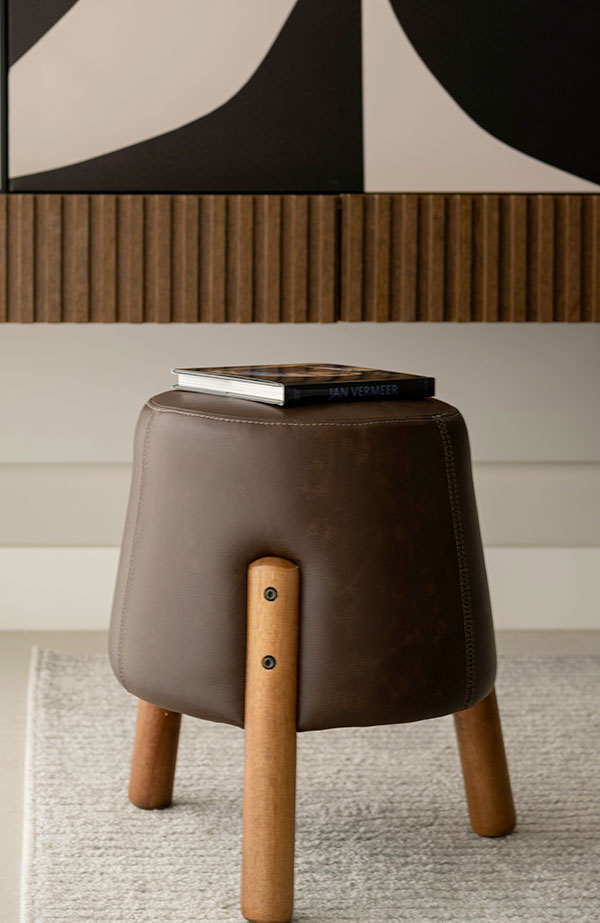
Photo: Caroline Badran | Unsplash
In a small space, the principles do not change — they become even more important. Every object matters more because there is less room for mistakes, which also means there is plenty of room for mistakes in a large space. A well-chosen multifunctional piece of furniture is worth more than three mediocre ones. A single strong artwork is worth more than a wall covered in frames. Natural light becomes your greatest ally — do not block it.
The sections that follow cover the entryway, living room, office, bar, bedroom, kitchen and bathroom. In a small apartment, some of these rooms do not exist separately — they cohabit. That is precisely where intention becomes essential: visually defining each zone without walls, using rugs (visit La Maison Générale for an incredible selection), lighting, and well-positioned furniture. A home office can live in a living room. A bar can fit on a cart in a corner. A bedroom can be a sanctuary even without a door.
Space is not a constraint. It is a reflection of your personality.
The Entryway — First Impressions
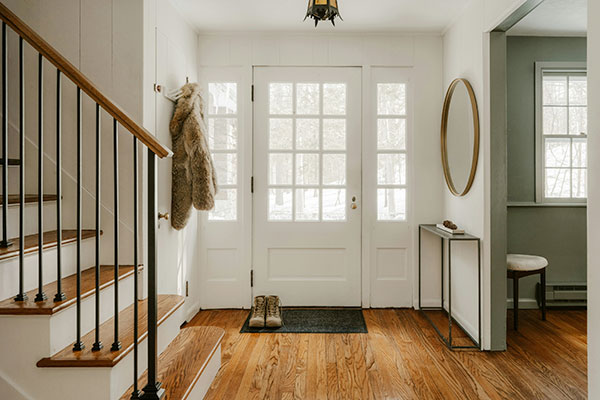
Photo: Clay Banks | Unsplash
The entryway is the most neglected room in the home — and yet it is the first thing your guests see, and the last thing you see when you leave. It deserves your attention.
In an often-reduced space, every element must be both functional and beautiful. An understated coat rack — in wood or matte black metal — for coats and jackets. A valet tray or small console for keys, wallet, and the watch you remove when you come home. This is not accumulation; it is intentional organisation.
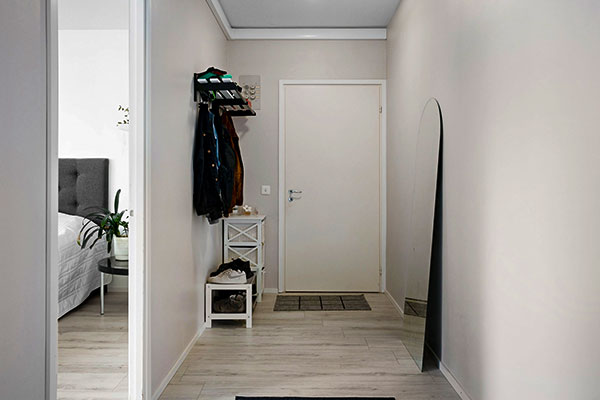
Photo: Alex Tyson | Pexels
A mirror is essential. Not for vanity — for that last look before you walk out the door. Large and well-framed, it also visually expands an often-narrow space. It is one of the best investments you can make for an entryway.
The lighting in the entryway must be warm. It is the first signal you send — cold overhead lighting says office, not home. A wall sconce or a small lamp on the console completely changes the tone.
And if you have the space, a plant in the entryway — even a small one — welcomes your guests with something living. It is a detail that matters.
The Living Room — The Art of Entertaining
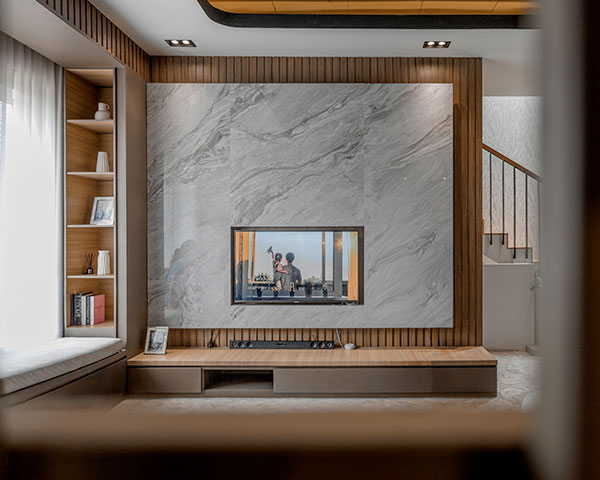
Photo: Bayu Franky | Pexels
This is often where you will receive your guests. Opt for noble materials that will last for years and age with you. Invest in them.
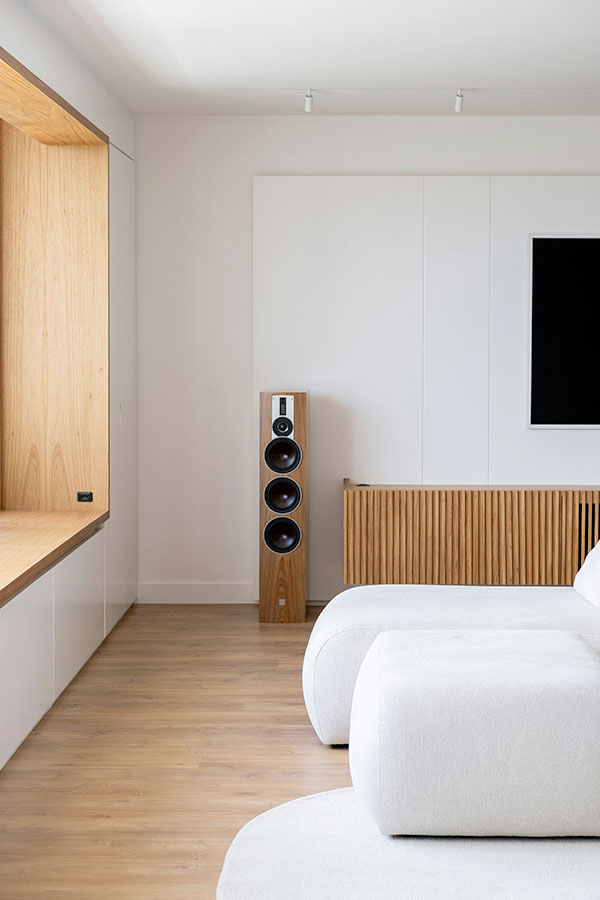
Photo: Caroline Badran | Unsplash
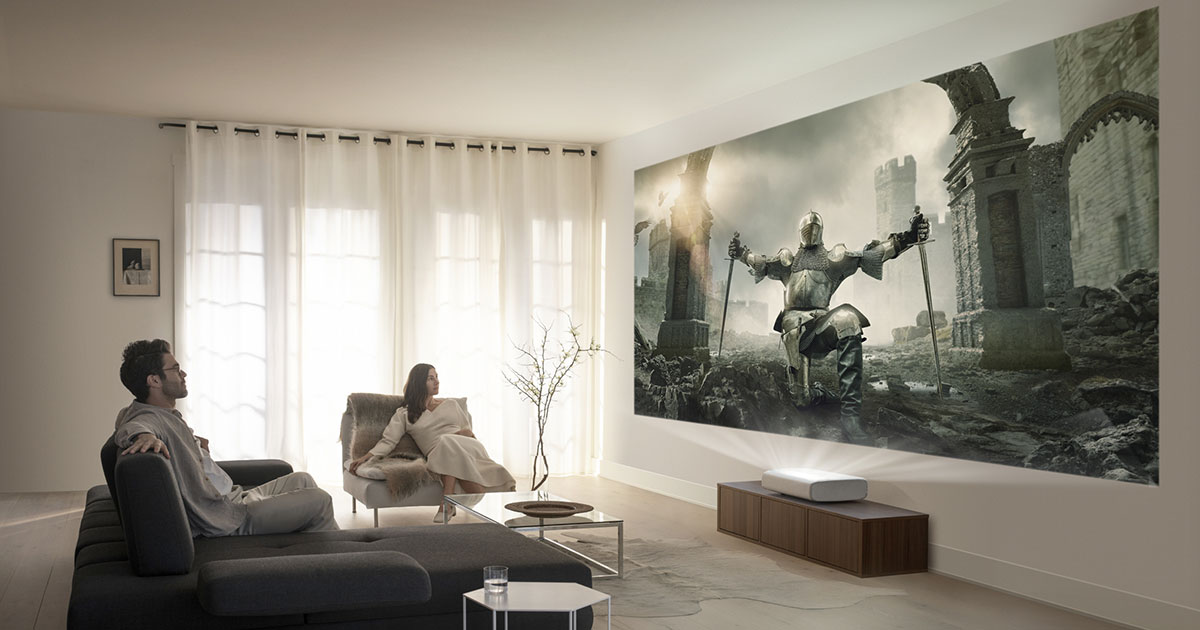
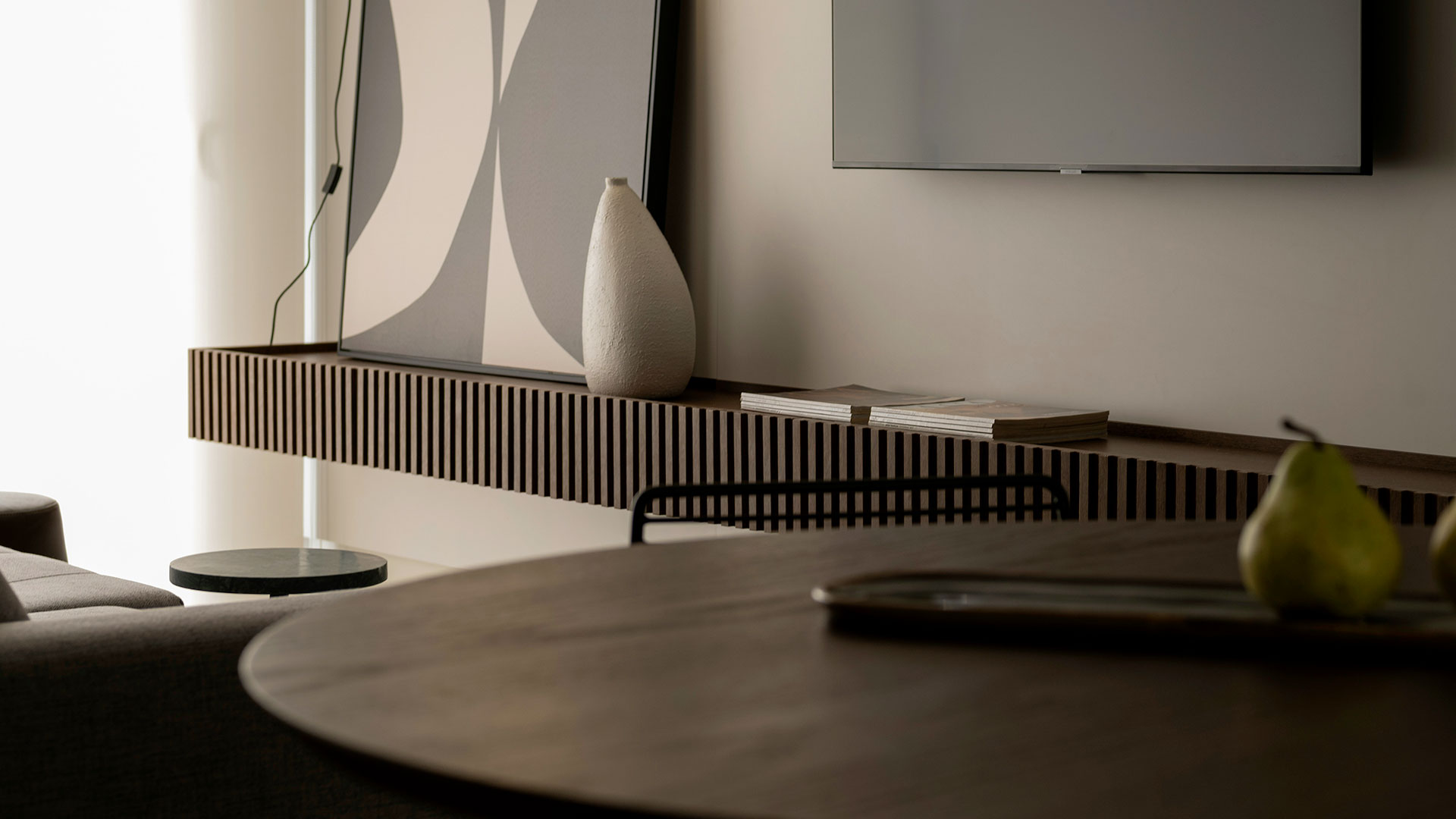
You want a living room with a refined aesthetic and a television for watching your favourite teams — there are solutions, whether it is a cabinet that closes or a frame with a beautiful artwork that covers your TV, anything is possible. You want statement pieces that mean something, that reflect your personality. That is essential. If your living room also serves as your office, there are ways to harmonise the two — it is not always easy, I am in the middle of that process myself, but it is possible.
The rug is the most underestimated element in the living room. It defines a zone, anchors the furniture and brings a warmth that no bare floor can offer. The rule: it must be large enough for the front legs of your furniture to rest on it, otherwise it looks lost in the middle of the room. Opt for wool or natural cotton in warm tones.
Mix raw materials that will stand the test of time. This is a theme that will recur throughout this article, and it is an important one: we invest for the long term so we do not have to repurchase pieces every year that do not last.
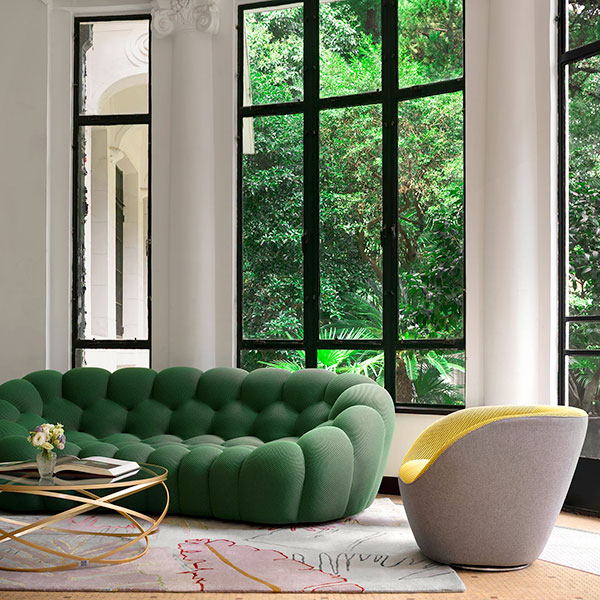
Photo: Roche Bobois Facebook page
A sofa is necessary, but do not clutter it with cushions to the point of negating its usefulness. If you have somewhere to store them when you have friends, family or colleagues over, perfect — otherwise, no more than two or three per sofa, loveseat or sectional. For the material, favour leather in warm tones. Avoid grey, which kills the atmosphere. White is certainly possible, but opt instead for a cream — and choose leather, once again, rather than fabric, especially in pale tones, otherwise you will spend your time cleaning it with a shampooer. Do not hesitate to embrace colour, like the Bubble collection by Roche Bobois imagined by Sacha Lakic in our header image — even if the trend is towards neutral tones, deep greens, navies and burgundies will bring life to your living room.
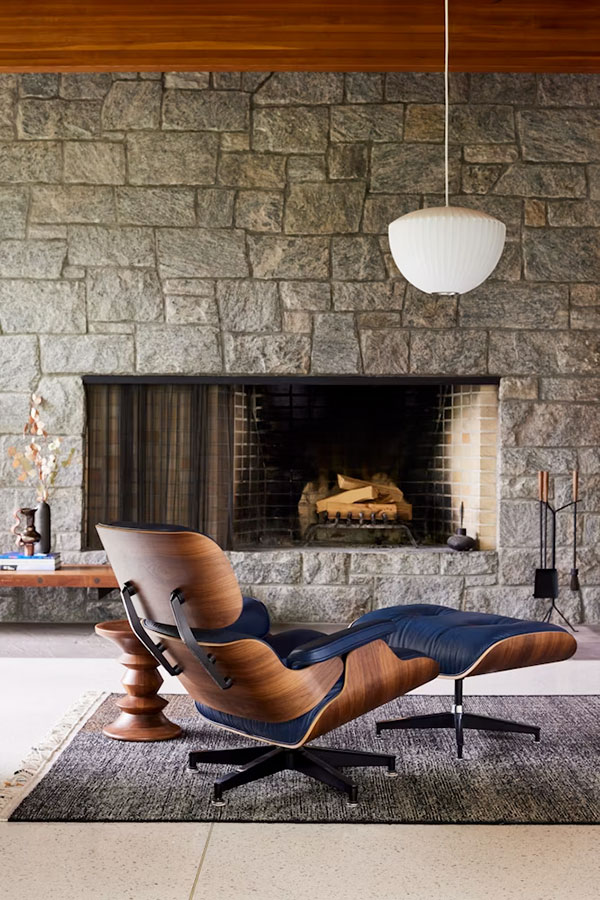
Photo: Herman Miller website
If you have the space, an Eames chair with its ottoman — from Herman Miller, of course — will be a cornerstone of your living room. Something that lets you read or rest at your leisure. Yes, it is expensive, but do not be tempted by a replica — opt instead for a pre-owned model in good condition.
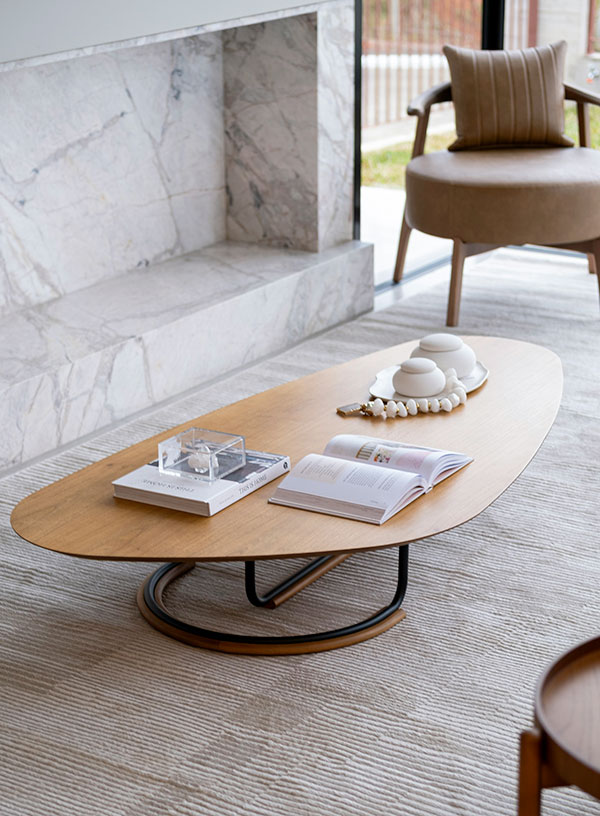
Photo: Caroline Badran | Unsplash
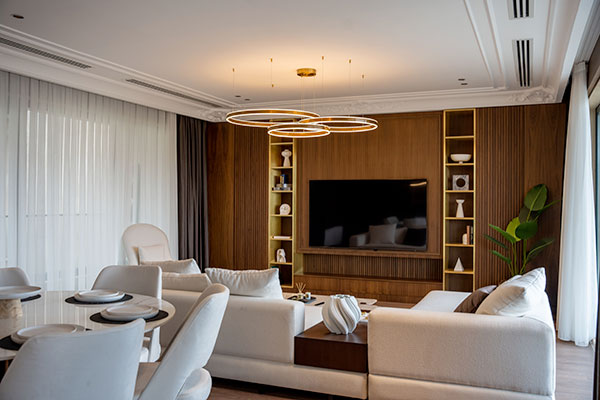
Photo: Ansar Muhammad | Pexels
Curtains are also often overlooked. Curtains in natural linen — those from RH are superb — that fall from ceiling to floor, even in a small space, instantly add height and elegance. They filter light without blocking it and bring a soft texture that balances the harder materials in your furniture. In winter, if they are close to a heat source, consider a curtain protector or thermal deflector. You can also add smart blinds like those from Serena by Lutron, which give you privacy while your curtains remain open.
Finally, think about tables. A solid wood or marble coffee table visually anchors the centre of the living room. Two small side tables are often better than one large one — they are more flexible when entertaining and allow you to create distinct conversation areas.
The Bar — Furnishing with Intention
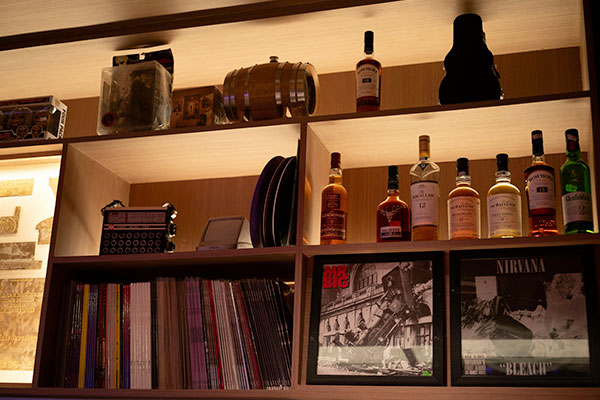
Photo: Ran Liwen | Unsplash
A home bar is not a luxury (well, perhaps a little) — it is a declaration of hospitality. It is the place that tells your guests you were thinking of them before they even arrived.
Start by choosing the format that suits your space. A bar built into an existing bookcase is elegant and discreet. A freestanding bar cabinet has character and can be moved. A bar cart is perfect for smaller spaces — it is functional, mobile, and can be tremendously elegant if chosen well. What matters is consistency with the rest of your décor.
The essentials: a selection of glasses suited to what you serve — quality whisky glasses (some Glencairn glasses or old fashioned glasses), coupes, highball glasses. No need to have everything, but what you do have must be good. For tools: a cocktail shaker, strainer, jigger, bar spoon, and a peeler for citrus zests. Understated, functional, tidy.
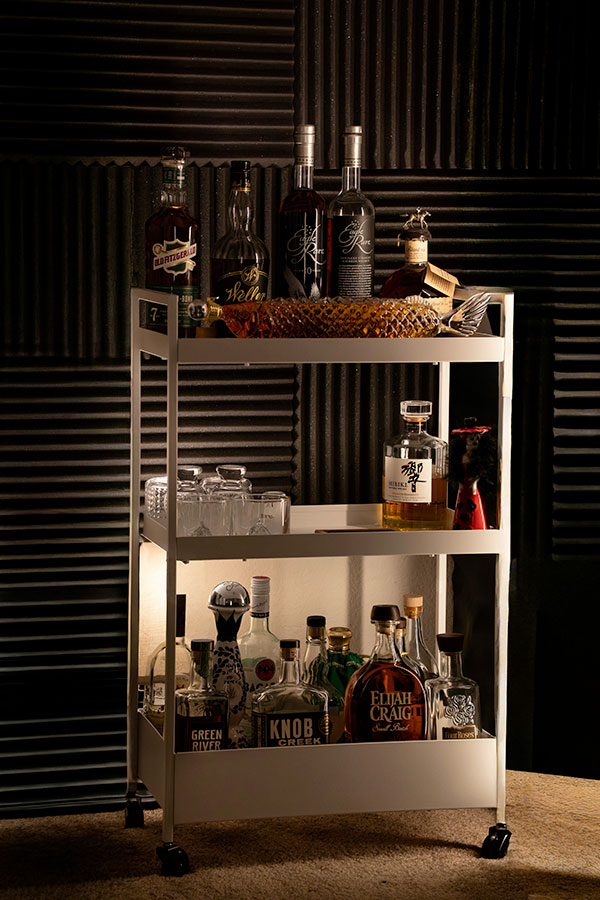
Photo: Nathan Nuyda | Unsplash
For bottles, think collection rather than accumulation. A characterful whisky, a quality gin, a good rum, a vermouth to keep refrigerated once opened. Rotate seasonally — some spirits lend themselves better to winter, others to summer.
The bar’s lighting deserves particular attention. Soft lighting, preferably from below or behind the bottles, immediately creates a warm ambiance and showcases your selections. This is not stagecraft — it is hospitality.
A well-kept bar is not a symbol of wealth. It is a symbol of generosity. You have thought about what your guests will enjoy drinking (with or without alcohol). That is all.
The Office — Your Workspace as an Extension of Self
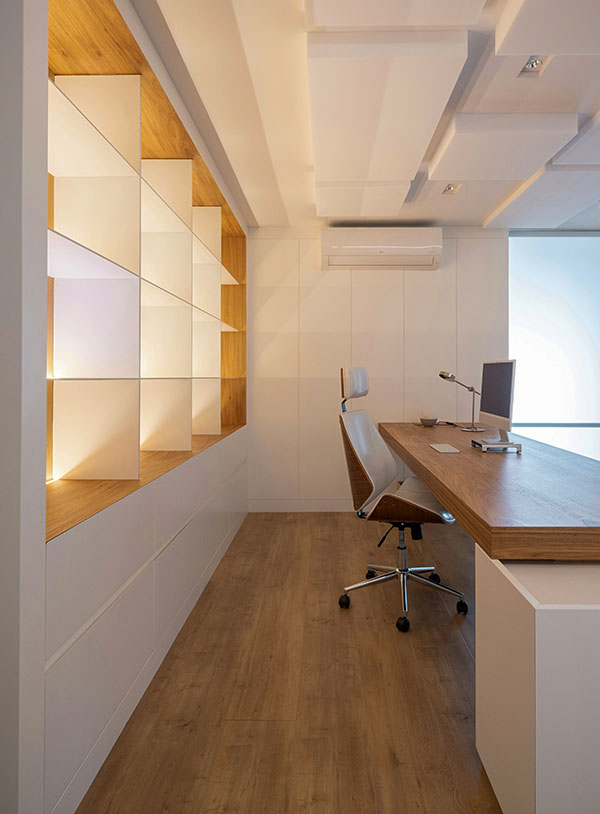
Photo: Caroline Badran | Unsplash
Your office says as much about you as your bookcase. A workspace reflects the way you think — not necessarily in perfect order, but with a logic that is your own. This is not about sterile perfection — it is about chosen order.
The surface first. Invest in a solid desk, preferably in solid wood like this Charlotte Perriand-inspired piece, with enough surface area that your monitor, notebook and coffee are not competing for space. Glass tops look beautiful in photos; in reality they are cold and show every smudge.
The chair next — and this is where people often go wrong. Thousands are spent on a desk, then you sit on a hundred-dollar chair. A good ergonomic chair, understated in its design, is an investment in your health as much as your productivity. Herman Miller (it is what I use, and it is perfect), Humanscale, Haworth — these are brands that last.
Office lighting must be functional without being harsh. A desk lamp with warm light, positioned correctly to avoid glare on your screen, makes all the difference at the end of the day. I use this Hue Play lamp mounted behind my monitor — very practical and controllable remotely.
On your desk, keep what inspires and remove what distracts. A clock with a dial face, a quality notebook, a pen with some weight in the hand. Not ten pens in a plastic cup. Not cables snaking in every direction — manage them; it is a detail that changes everything visually.
A bookcase, if you have the space, is the character piece par excellence of an office. It does not need to be packed to the rafters — a few carefully chosen books, objects that hold meaning, are worth more than a collection that impresses but that you have never opened.
Finally, the office works best when it has a door — physical or mental. When you leave that space, truly leave it. That, too, is the discipline of a gentleman. That said, space does not always allow for it — that is my situation, and I am still looking for a solution.
The Kitchen — The Workshop of Daily Life
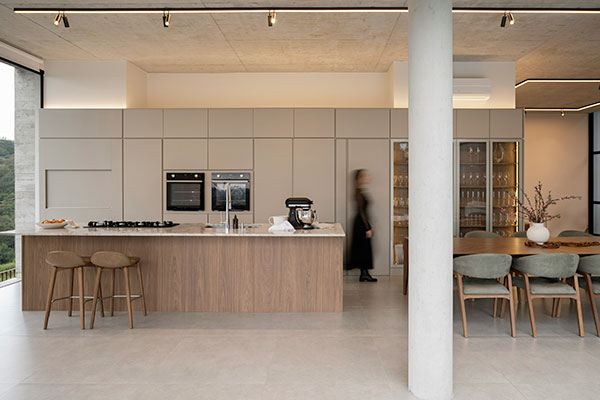
Photo: Caroline Badran | Unsplash
The kitchen is often the most functional space in the home, and therefore the last one we furnish with intention. That is a mistake. A gentleman who knows how to entertain also knows how to prepare, at minimum, a simple meal with quality ingredients.
Furnishing a gentleman’s kitchen rests on a simple principle: clear the surfaces. A cluttered counter is a kitchen that does not work. Put away what you do not use daily, and keep within reach what truly matters — a good cutting board, two or three quality knives kept sharp, and a worthy olive oil (we love Favuzzi — their Laval boutique carries exclusive bottles that are worth the trip).
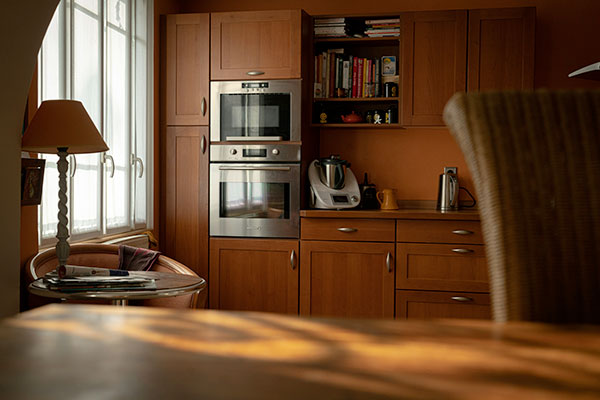
Photo: Maxime Pachot-Prunier | Unsplash
Invest in a few quality utensils rather than drawers full of useless gadgets. A good cast-iron pan, a stainless steel saucepan, a chef’s knife with some heft to it. These objects last decades if you treat them well.
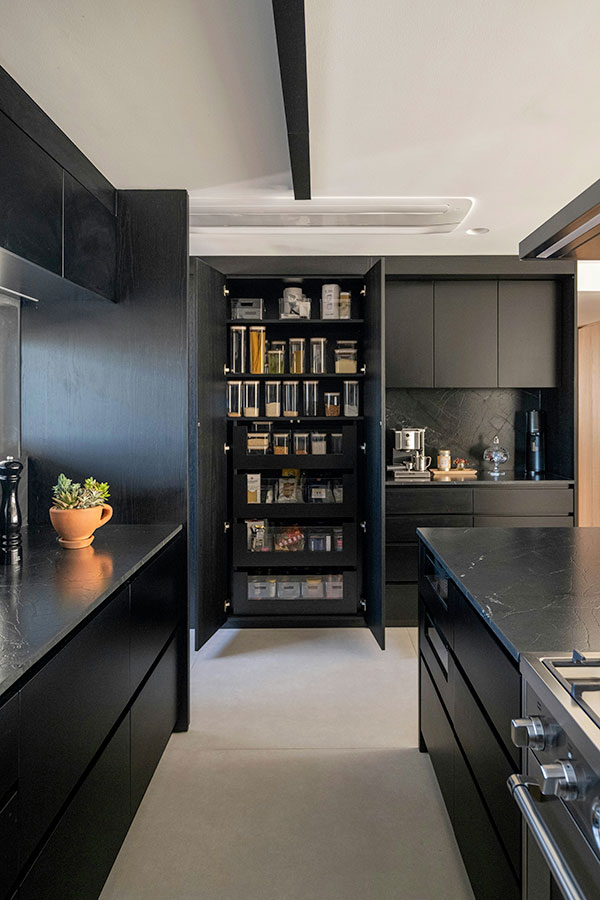
Photo: Caroline Badran | Unsplash
For storage, closed cabinets are always preferable to open shelving — unless you have a truly beautiful selection of objects to display (but we all know that ends in chaos). A quality set of glass or clear plastic containers for spices and dry goods — less risk if dropped — is both functional and visually clean.
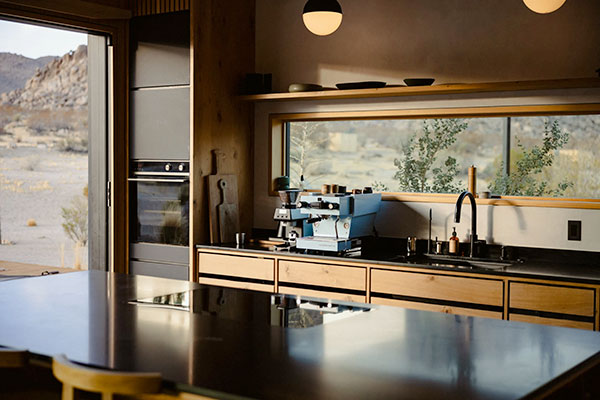
Photo: La Marzocco website
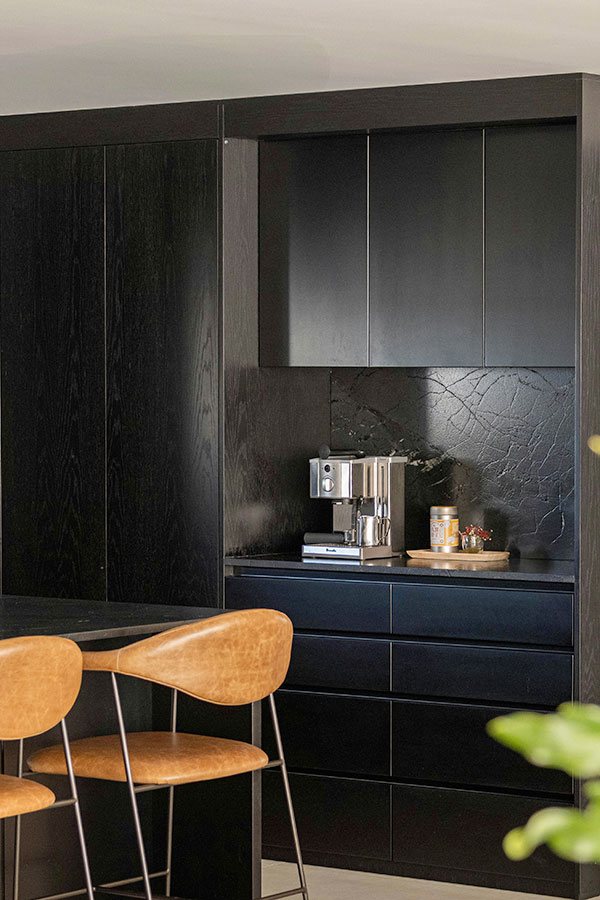
Photo: Caroline Badran | Unsplash
The coffee maker deserves its own mention. Whether you are an espresso or filter person, invest in a quality machine and give it a place of honour. Your morning coffee is a ritual — treat it as one. We are preparing a dedicated article on the subject.
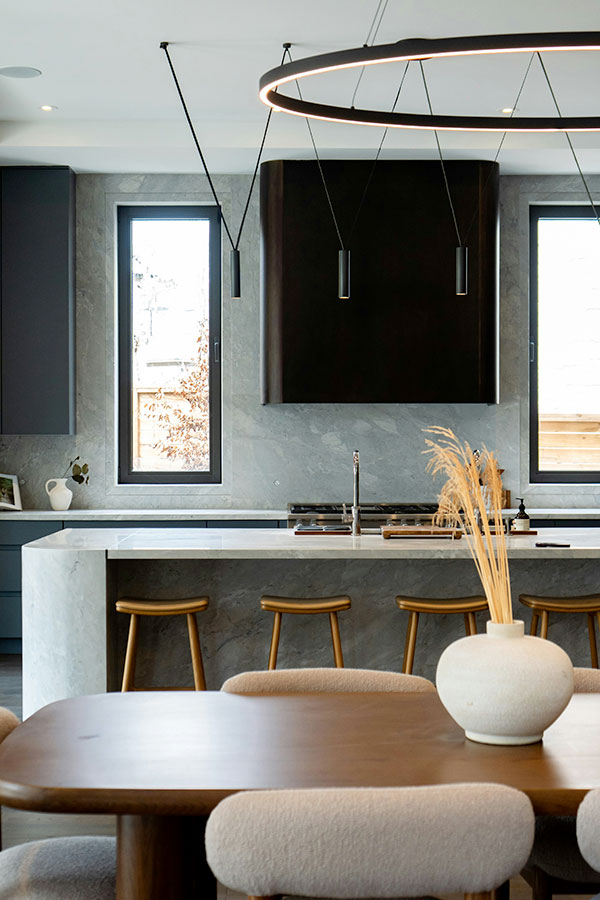
Photo: Franco Debartolo | Unsplash
The backsplash behind the stove and sink — often the most visible element in the kitchen and the most overlooked. Natural stone, ceramic that echoes the room’s colours, or Dekton transforms an ordinary kitchen into one with real character. This is where a noble material makes all the difference.
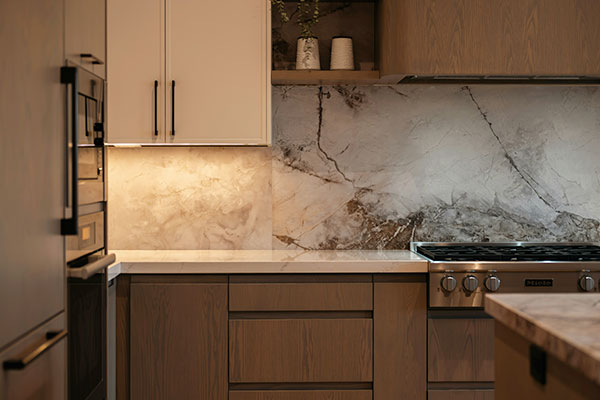
Photo: Franco Debartolo | Unsplash
The range hood is often the most overlooked element in the kitchen — and yet one of the most visible. If you can change it, a beautiful brushed steel or stone hood above the stove becomes an architectural feature in its own right. Functional and aesthetic, it gives character to an otherwise understated kitchen.
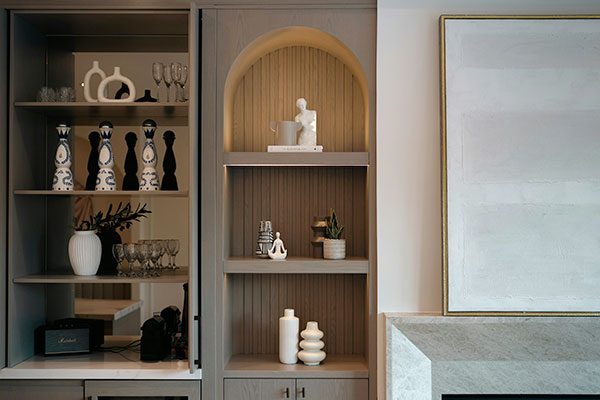
Photo: Franco Debartolo | Unsplash
For colours and materials, opt for neutral tones and durable materials — stone, stainless steel, treated wood. Avoid overly trendy choices; you will tire of them in two years. A countertop in a noble material like Dekton from Cosentino will cost you upfront but last a lifetime — and no red wine stains to worry about.
One last detail that designers change first in any existing kitchen: the hardware. Swapping out generic pulls for brushed brass or leather handles costs little and immediately transforms the space. It is the detail that separates a furnished kitchen from a considered one.
The Dining Room — The Art of the Table
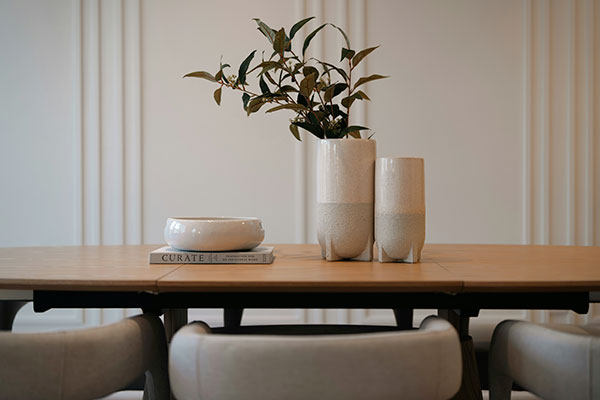
Photo: Franco Debartolo | Unsplash
The dining room is often the most underestimated space in a man’s home, partly because it is frequently open to the kitchen — and yet it is where real conversations happen, where meals linger, where evenings unfold. It deserves your attention.
The table first. It is the centrepiece — invest accordingly. A solid wood or marble table, understated in its lines, large enough for guests to sit comfortably without elbows touching. Avoid glass — beautiful in photos, unforgiving in daily life with fingerprints and knocks. At RH, Maison Corbeil, Mariette Clermont, or with a cabinet-maker, you will find pieces that last a lifetime and gain character with time.
The chairs next — and this is where things often get rushed. A noble table deserves chairs to match. Leather is the best choice: it ages well, is easy to maintain, and brings a warmth that pale fabrics simply cannot offer. Look for Canadian brands with clean lines and solid construction. The chairs do not all need to be identical — placing a different chair at each end of the table is a designer detail that costs little and changes everything.
The table linens: opt for natural linen, washable and beautifully rumpled. No plastic, no vinyl — something that can be washed and that holds up over time. And a simple centrepiece — a low plant, a few candles, an object with a story. Not a floral arrangement so tall it hides your guests on the other side of the table.
The Bedroom — The Sanctuary
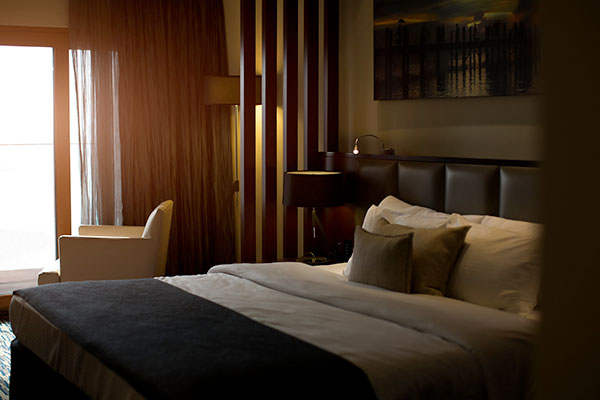
Photo: Adobe Stock
We had already written about bedroom design, but we have revisited everything and bring you the essentials here.
This is the most important space — your haven of peace — and it is often the most neglected. So we say goodbye to screens. No phone, no tablet: leave them in the living room. For alarms, you will hear them — I have been doing this for a few months now and it works. And I have no desire to look at my phone right before bed. You can also invest in a clock whose only functions are telling the time and waking you up. Set it on a beautiful nightstand. We might have suggested the Loftie, but since it is digital, you will find yourself on a screen again before sleep.
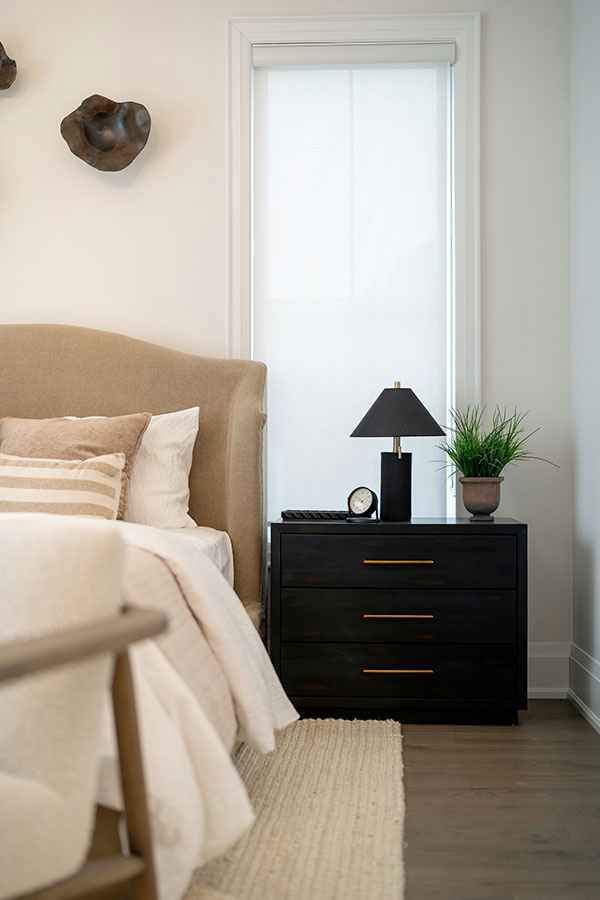
Photo: Franco Debartolo | Unsplash
Our alarm clock picks
- The AJ Station is one of those objects that transcends time — an iconic graphic dial first designed by Arne Jacobsen in 1939, a sleek metal base that echoes the lines of Scandinavian design, with a snooze function and built-in light sensor. An alarm clock that earns its place on a gentleman’s nightstand. Get it here
- The Lemnos Liki is as much an object as it is a clock — natural wood casing, clean design by Riki Watanabe, silent movement. An analogue clock that integrates naturally into any bedroom where noble materials have their place. Buy it here
- The Braun BC12B is the essence of what a clock should be — classic dial, silent quartz movement, a crescendo beep that wakes you gradually without brutality. Understated, reliable, timeless. Get it here
Speaking of which, the nightstand is a focal point of the bedroom. Whether for a lamp, storing your watches, or personal objects, it can be tremendously useful. And buy two — one for each side of the bed. You are trying to become a gentleman, after all; do not only think of yourself.
As for the bed itself, a solid wood frame is ideal. Start by investing here — you will spend roughly 25 years of your life in bed, so it is the single most important element. Bedding must be of excellent quality. Opt for washed linen — a natural thermal regulator that improves with washing — or long-staple cotton: Pima, Supima, or Egyptian, whose softness and durability are unmatched. For weave, percale offers that crisp, cool touch associated with fine hotels, while sateen is softer and more lustrous. Houses like Frette, Sferra, Four Seasons Home, or Libeco for linen are reliable references. Think investment, not expense — it will last you for years.
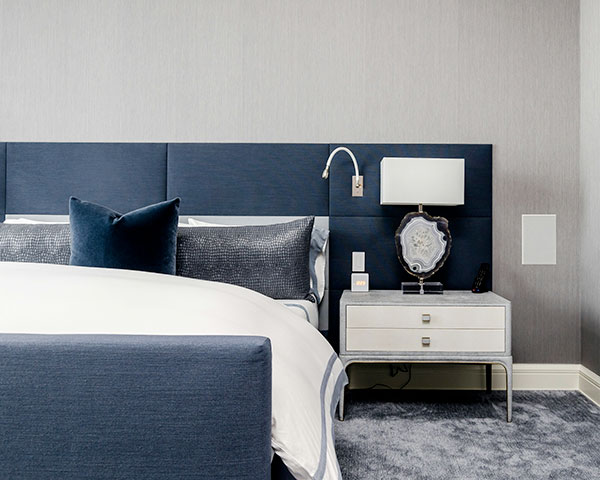
Photo: Chastity-Cortijo | Unsplash
The headboard is the bedroom equivalent of the living room rug — it anchors the room, provides visual direction, and completes your investment in the bed. Upholstered fabric for comfort, solid wood for character: choose according to your style, but do choose one.
Blackout curtains are non-negotiable. In thick linen or velvet depending on your style, they block light and directly contribute to the quality of your sleep. Curtains that fall from ceiling to floor also add height and an elegance that blinds alone simply cannot offer.
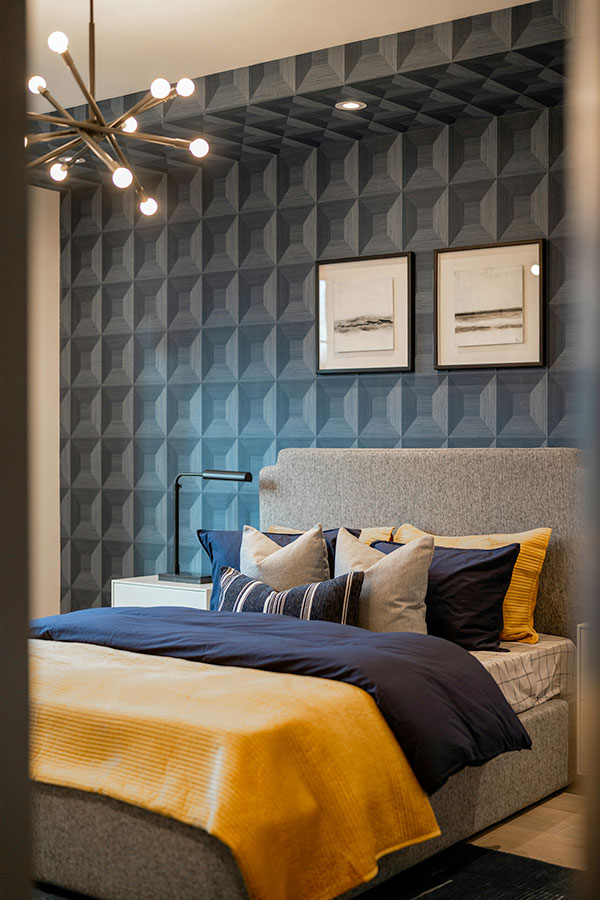
Photo: Franco Debartolo | Unsplash
For colours, opt for tones that calm rather than stimulate: charcoal grey, deep navy, olive green, or grey-green are natural allies of sleep. Avoid high-intensity colours — bright red, lemon yellow, pure white, total black, royal purple, orange — they activate the mind rather than settling it. The bedroom is not a place to make a statement; it is a place to restore yourself.
A rug at the foot of the bed — even a modest one — visually anchors the room and brings that warmth underfoot in the morning that sets the tone for the entire day.
What is paramount in a bedroom is storage — whether for your made-to-measure clothing or ready-to-wear. Every gentleman would love a walk-in wardrobe, but it is not always possible. IKEA’s PAX wardrobes can be a decent option, though they can prove costly and may not integrate perfectly into your décor. Why not have one built to measure, tailored to your space? By keeping your clothes behind closed doors, you will feel that sense of calm that comes from not having things in plain sight. Chest of drawers may seem appealing, but for your wardrobe, they are not ideal. And if you are a tenant, obtain your landlord’s approval before undertaking any work.
A tidy bedroom is not an austere bedroom — it is a bedroom that truly belongs to you.
The Bathroom — The Morning Ritual
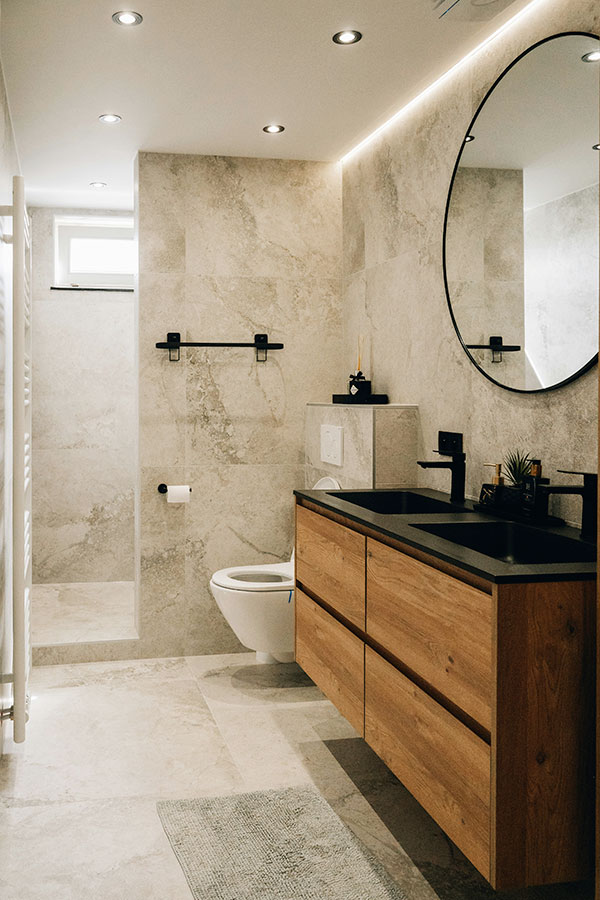
Photo: Serjan Midili | Unsplash
The bathroom is where you begin and end every day. It deserves more attention than most men give it.
The first principle: edit. Remove everything that is cluttering the counter. A clear bathroom counter, with only what you need day to day, completely changes the atmosphere of the room — and your morning. Everything else goes in a drawer or a storage cabinet.
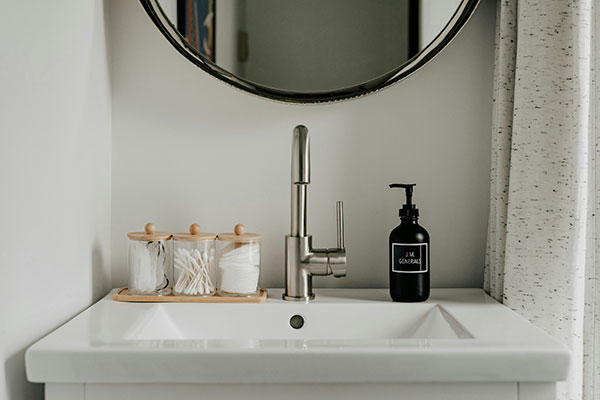
Photo: Clay Banks | Unsplash
For containers, adopt a curation approach rather than systematic replacement. Certain premium skincare brands — Aesop, Soja & Co. and Le Labo, to name a few — offer bottles that are objects in their own right. Those, you keep and display. What you replace is the crushed plastic shampoo bottle. The rule is simple: if the container is beautiful, it stays; if not, decant into a glass or ceramic bottle.
Shaving deserves its own corner. A good shaving brush, a lathering bowl, an alum stone — set it all up neatly, not scattered around the sink, but organised like a ritual that has some dignity to it.
Two or three quality towels are more than enough — there is no need to accumulate. For colour, be mindful when purchasing: pure white shows every mark and demands constant upkeep. Opt instead for natural linen, warm grey, or a confident dark tone like navy or grey-green — colours that age well and hold their elegance between washes. What to avoid: a mismatched multicolour collection that looks like a budget hotel room.
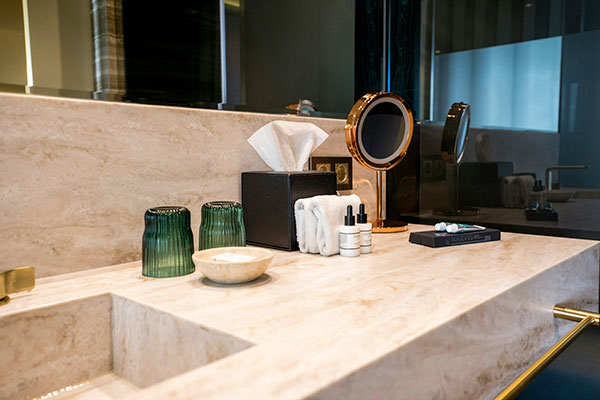
Photo: Antonio Araujo | Unsplash
Bathroom lighting is often overlooked. Side lighting around the mirror, rather than a single overhead fixture, is far more flattering and far more functional for skincare and shaving.
Finally, a good mirror — wide and well-framed — is the most underestimated investment in a bathroom. It visually expands the space and lends presence to a room that is often too small.
The Training Space — The Gentleman’s Gym
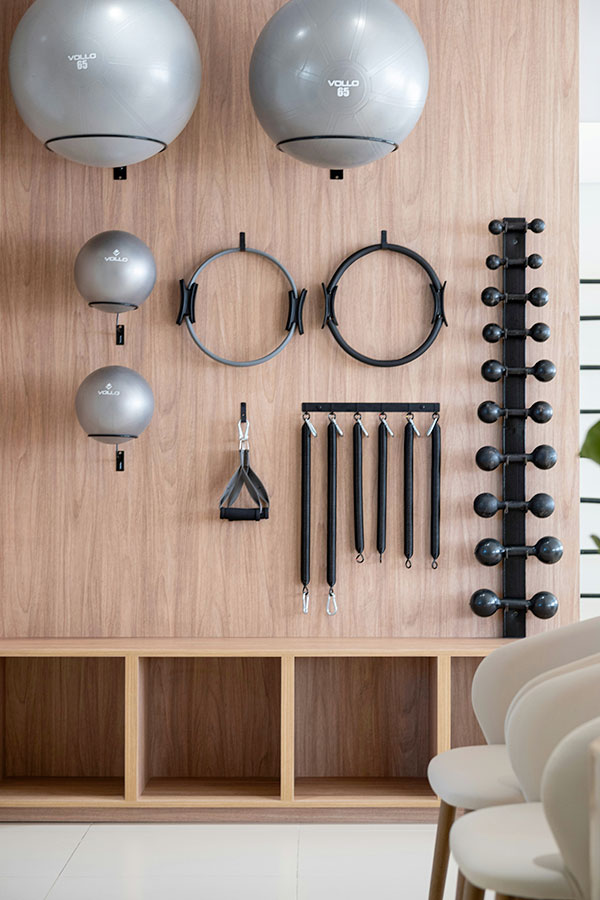
Photo: Caroline Badran | Unsplash
Since the office moved into the home for many of us, the gym followed. A home training space is not a luxury (though for some it certainly is) — it is an investment in your health and daily discipline. And like the rest of your interior, it can be composed with intention rather than cluttered with equipment that ends up serving as a coat rack.
The principle is the same as everywhere else: less, but better. A gentleman’s training space does not need to look like the neighbourhood gym. A few well-chosen pieces of equipment, a protected floor, a mirror — that is enough for a serious, consistent workout.
The floor first. A quality mat protects your flooring, absorbs noise and visually defines the training zone. Gorilla Mats, a Canadian company, offers thick, durable mats that integrate cleanly into any space — even a corner of the living room or a spare bedroom.
For equipment, think functional and understated. A set of cast-iron kettlebells — WeGym offers beautiful ones with a matching rack — covers the majority of workouts without taking over the space. A quality jump rope like the Elevate Rope rounds out the cardio side — lightweight, stored in seconds, brutally effective. If you want to invest in something truly timeless, Pent Fitness and Nohrd offer incredible equipment — but the price reflects it.
A wall mirror is both functional and visual — it lets you check your form and visually expands an often-limited space. Large, frameless or with a simple matte black frame, it can come from the same retailers mentioned throughout this article without clashing with the rest of your décor.
Finally, think about storage. Wall hooks for ropes and resistance bands, a simple shelf for the kettlebells — everything stored, everything accessible. A well-organised training space is one you will actually use.
Scent — The Invisible Signature
A designer always thinks about scent — and yet it is the most forgotten dimension of interior design. A gentleman’s home has an olfactory signature. Not an accumulation of competing fragrances from room to room, but a coherent, discreet note that says something about you before you have even opened your mouth.
A quality candle in the living room, a discreet diffuser in the entryway. Wood, leather, cedar, vetiver — notes that correspond to the gentleman’s universe. Avoid sweet or overly floral fragrances, which create a dissonance with a well-considered masculine interior. Consider the Ernesto candle by Trudon, available at La Maison Générale or directly from Trudon.
The rule: one dominant note per space, and nothing in the kitchen — the smells of cooking should remain the smells of cooking.
Atmosphere — What You Hear and What You Feel
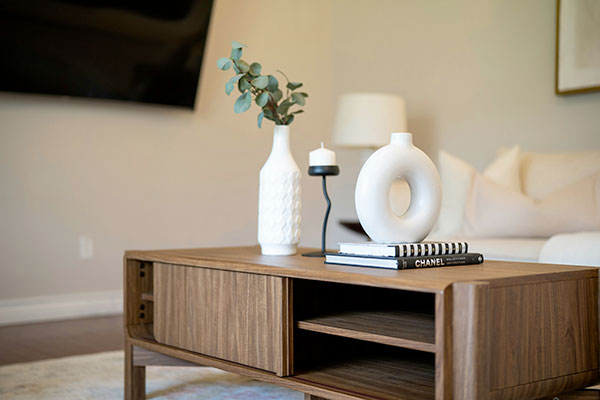
Photo: Franco Debartolo | Unsplash
The atmosphere of an interior cannot be seen — it is felt. And it operates through two dimensions that your furnishing directly influences: sound and temperature.
Acoustics first. An empty apartment resonates — it is uncomfortable and impersonal. Rugs, heavy curtains, books on shelves and cushions absorb sound and create that hushed atmosphere you feel immediately upon entering a well-furnished home. This is not a detail — it is what distinguishes a lived-in apartment from a decorated one.
Temperature next. A well-heated interior in winter, well-ventilated in summer — that is invisible hospitality. A properly set thermostat, curtains that retain coolness in summer and warmth in winter. And if you are fortunate enough to have a fireplace — functional or bioethanol — it is the single most powerful atmospheric element available. A fire says more about your sense of welcome than any designer piece of furniture.
Maintenance — Because a Gentleman’s Home Is Kept
A well-considered interior does not maintain itself. Daily upkeep is not a chore — it is the natural extension of the care you bring to your space. Clean floors, clear surfaces, a kitchen free of residue: that is what distinguishes a lived-in interior from a neglected one. Fortunately, the tools available today make that maintenance nearly invisible.
The Robot Vacuum-Mop — Automated Daily Maintenance
A robot vacuum-mop programmed to run every night does more for your interior than any improvised weekly cleaning session. The market has evolved enormously — the best models vacuum, mop and clean themselves, with a docking station that empties the dustbin and rinses the mop pad automatically. Here is our selection according to your budget and priorities.
Interesting options:
- Dreame X60 Max Ultra Complete — The best robot vacuum-mop of 2026 according to independent testing. Ultra-slim 3.12″ navigation, corner mopping with an extendable pad, all-in-one station. For those who want the best, without compromise.
- Roborock Qrevo CurvX — Ranked 3rd overall in independent tests regardless of price point, available around $900. Precise navigation, powerful suction, zero hair tangles. The smart choice for those who refuse to overpay for underperformance.
- Dyson Spot+Scrub Ai — Dyson’s first robot vacuum-mop, launched in March 2026. AI-powered stain detection with green laser illumination, self-cleaning roller, bagless station. For those who are loyal to the brand and want the most visible technology on the market.
- Ecovacs Deebot T80S Omni — The best robot vacuum-mop under $600, full stop. 91% efficiency in deep carpet cleaning, zero hair tangles, a roller mop that rinses itself automatically. Flagship-level results at an accessible price.
Manual Maintenance — For What the Robot Cannot Reach
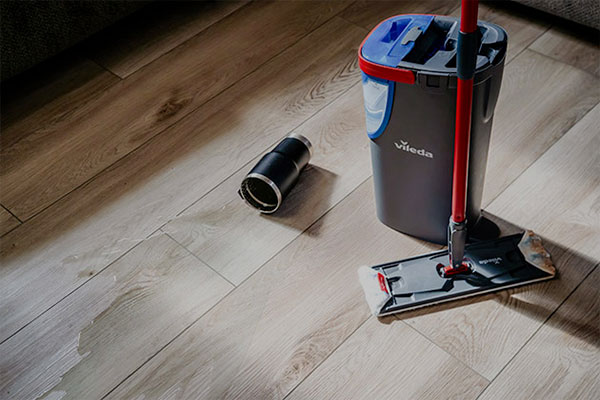
Photo: Vileda website
The robot handles the floors day to day — but there are zones it cannot reach, and surfaces that require a different kind of attention. For windows, vertical surfaces and quick clean-ups between robot passes, a good manual system remains indispensable. Vileda is the reference in this category — functional, effective, without unnecessary pretension. I recently picked up the Vileda H2prO. With its flat mop system, it is perfect for powerful cleaning in a compact format. Its dual-tank system keeps clean water and dirty water 100% separate.
Furnishing Your Home Like a Gentleman: An Ongoing Endeavour
An interior is never truly finished — it evolves with the person who inhabits it. The essential thing is not to have everything perfect from day one, but to choose with intention, room by room, object by object. That is what it means to live like a gentleman.
Note: When we learn that an error has slipped into our site, we report it by correcting it. If you notice an error, please inform us by contacting us through our Contact us page.